For several years Iran has delayed, obstructed and played for time when negotiating with the IAEA, the EU and the United States over its nuclear programme. But this cannot continue and at some point soon, either they will declare themselves nuclear capable, Israel will launch a pre-emptive strike or a deal will be struck with the U.S. You would most likely bet on the latter, given the internal strife that is occurring within the Islamic republic. The fact that the Obama administration has placed a September deadline on engagement from Iran, that is not open-ended, means that Tehran must quickly decide what they wish to do.
Israel has long predicted that Iran will have enough enriched uranium to build a nuclear weapon by sometime in late 2010. Assuming Iran is prepared to negotiate then, Obama and Khameini will have a year or so to thrash out a deal. But with Khameini's position severely weakened by the recent post-election protests and Ahmadinejad in an even weaker position than he was prior to his "victory", any substantive diplomatic moves seem incalculably complicated. The nuclear clock will still be ticking regardless of the internal power struggle in Iran. It is not inconceivable that a full blown political crisis is taking place in Iran, whilst the country crosses the nuclear threshold. How the rest of world - specifically the United States and Israel - respond under those circumstances is impossible to say.
Following Iran's dramatic June, a quieter July - on the streets at least - has followed. But behind the scenes political struggle has rumbled on. Now Ahmadinejad and Khameini have fallen out over the president elect's choice of vice president, Esfandiar Rahim Mashaie, who had previously describing Iran as a friend of Israelis. Ahmadinejad defied the supreme leaders demand for Mashaie to be sacked. The following day, Ahmadinejad fired the country's Intelligence Minister, Gholam Hossein Mohseni Ejeie, who was subservient to Khameini. This spat - almost unthinkable a month ago - shows the ruptures that have opened since the election. The United States cannot have failed to notice and internal disagreements like this, will weaken the Iranian leadership in any nuclear negotiation.
What happens next to Ahmadinejad is obviously critical. For Khameini to drop him and call another election would be an astonishing turn around. If he was forced out, it would most likely be done in a drawn out manner to avoid such a loss of face for the Supreme leader. The consequences and possible backlash from Ahmadinejad's allies in the Republican Guard could be even more dramatic. Grasping the outcomes for Iranian politics at the moment is extremely challenging, as knowing what exactly is happening in the corridors of power is very difficult and as this is unchartered territory. Such internal dispute has never occurred within Tehran since 1979.
Ahmadinejad could be out then and a compromise between the Khameini camp and the Mousavi-Rafsanjani-Khatami alliance seems a possibility to ease Iran through this period. Who would emerge as president is very unclear. Mousavi regards himself as a defender of Ayatollah Khomeini's Islamic revolution, having served as prime minister in the 1980s. His belief is that Khameini has betrayed the ideals set out from 1979. Given this and ff Mousavi emerges in the power, how he deals with the nuclear negotiations is a whole new question.
Tuesday, July 28, 2009


Fisk on Arab culture
There was an excellent article today by the Independent's Robert Fisk on Arab culture. Whilst large sections of Arab society are progressive, intelligent and engaging with the modern world, the Arab world as a whole has stagnated and been left behind by the rest of the world. Arguably this failure to flourish, has allowed the West to pursue an often exploitative foreign policy and let Israel undertake repressive policies against the Palestinians with impunity.
Why is the Arab world – let us speak with terrible sharpness – so backward?
Why so many dictators, so few human rights, so much state security and torture,
so terrible a literacy rate?
Why does this wretched place, so rich in oil, have to produce, even in the age of the computer, a population so poorly
educated, so undernourished, so corrupt? Yes, I know the history of Western
colonialism, the dark conspiracies of the West, the Arab argument that you
cannot upset the sheikhs and the kings and the autocrats, the imams and the
emirs when the "enemy is at the gates". There is some truth to that. But not
enough truth.
Once more the United Nations Development Programme has popped up with yet one more, its
fifth, report that catalogues – via Arab analysts and academics, mark you – the
retarded state of much of the Middle East. It talks of "the fragility of the
region's political, social, economic and environmental structures... its
vulnerability to outside intervention". But does this account for
desertification, for illiteracy – especially among women – and the Arab state
which, as the report admits, is often turned "into a threat to human security,
instead of its chief support"?As Arab journalist Rami Khouri stated bleakly last week: "How we tackle the underlying causes of our mediocrity and bring about real change anchored in solid citizenship, productive economies and stable
statehood, remains the riddle that has defied three generations of Arabs." Real
GDP per capita in the region – one of the statistics which truly shocked Khouri
– grew by only 6.4 per cent between 1980 and 2004. That's just 0.5 per cent
annually, a rate which 198 of 217 countries analysed by the CIA World Factbook
bettered in 2008. Yet the Arab population – which stood at 150 million in 1980 –
will reach 400 million in 2015.I notice much of this myself. When I first came to the Middle East in 1976, it was crowded enough. Cairo's steaming, fetid
streets were already jam-packed, night and day, with up to a million homeless
living in the great Ottoman cemeteries. Arab homes are spotlessly clean but
their streets are often repulsive, dirt and ordure spilling on to the pavements.
Even in beautiful Lebanon, where a kind of democracy does exist and whose people
are among the most educated and cultured in the Middle East, you find a similar
phenomenon. In the rough hill villages of the south, the same cleanliness exists
in every home. But why are the streets and the hills so dirty?
I suspect that a real problem exists in the mind of Arabs; they do not feel that they own
their countries. Constantly coaxed into effusions of enthusiasm for Arab or
national "unity", I think they do not feel that sense of belonging which
Westerners feel. Unable, for the most part, to elect real representatives – even
in Lebanon, outside the tribal or sectarian context – they feel "ruled over".
The street, the country as a physical entity, belongs to someone else. And of
course, the moment a movement comes along and – even worse – becomes popular,
emergency laws are introduced to make these movements illegal or "terrorist".
Thus it is always someone else's responsibility to look after the gardens and
the hills and the streets.And those who work within the state system – who work directly for the state and its corrupt autarchies – also feel that their existence depends on the same corruption upon which the state itself thrives.
The people become part of the corruption. I shall always remember an Arab
landlord, many years ago, bemoaning an anti-corruption drive by his government.
"In the old days, I paid bribes and we got the phone mended and the water pipes
mended and the electricity restored," he complained. "But what can I do now, Mr,
Robert? I can't bribe anyone – so nothing gets done!"Even the first UNDP report, back in 2002, was deeply depressing. It identified three cardinal
obstacles to human development in the Arab world: the widening "deficit" in
freedom, women's rights and knowledge. George W Bush – he of enduring freedom,
democracy, etc etc amid the slaughter of Iraq – drew attention to this.
Understandably miffed at being lectured to by the man who gave "terror" a new
name, even Hosni Mubarak of Egypt (he of the constantly more than 90 per cent
electoral success rate), told Tony Blair in 2004 that modernisation had to stem
from "the traditions and culture of the region".Will a solution to the Arab-Israeli war resolve all this? Some of it, perhaps. Without the constant
challenge of crisis, it would be much more difficult to constantly renew
emergency laws, to avoid constitutionality, to distract populations who might
otherwise demand overwhelming political change. Yet I sometimes fear that the
problems have sunk too deep, that like a persistently leaking sewer, the ground
beneath Arab feet has become too saturated to build on.
I was delighted some months ago, while speaking at Cairo University – yes, the same academy which
Barack Obama used to play softball with the Muslim world – to find how bright
its students were, how many female students crowded the classes and how,
compared to previous visits, well-educated they were. Yet far too many wanted to
move to the West. The Koran may be an invaluable document – but so is a Green
Card. And who can blame them when Cairo is awash with PhD engineering graduates
who have to drive taxis?And on balance, yes, a serious peace between Palestinians and Israelis would help redress the appalling imbalances that
plague Arab society. If you can no longer bellyache about the outrageous
injustice that this war represents, then perhaps there are other injustices to
be addressed. One of them is domestic violence, which – despite the evident love
of family which all Arabs demonstrate – is far more prevalent in the Arab world
than Westerners might realise (or Arabs want to admit).
But I also think that, militarily, we have got to abandon the Middle East. By all means, send the
Arabs our teachers, our economists, our agronomists. But bring our soldiers
home. They do not defend us. They spread the same chaos that breeds the
injustice upon which the al-Qa'idas of this world feed. No, the Arabs – or,
outside the Arab world, the Iranians or the Afghans – will not produce the
eco-loving, gender-equal, happy-clappy democracies that we would like to see.
But freed from "our" tutelage, they might develop their societies to the
advantage of the people who live in them. Maybe the Arabs would even come to
believe that they owned their own countries.
http://www.independent.co.uk/opinion/commentators/fisk/robert-fisk-why-does-life-in-the-middle-east-remain-rooted-in-the-middle-ages-1763252.html
Monday, July 27, 2009
Lebanon's perfect fragility
Beirut's road network is a web of side-streets, dark underpasses, chaotic junctions and gridlocked one way routes. This organized chaos in many ways reflects the complex nature of Lebanese society. I have recently returned from Lebanon and I can't recall a country of such contrasts. Arriving at night time you miss this daytime chaos. The only indications that you are in Beirut are the lone soldier manning a checkpoint and the large poster of Rafiq Hariri. First impressions count and the no-nonsense and deceptively friendly border official, looking back, set the tone.
West Beirut's Hamra district is now an moderately affluent, often quiet, neighbourhood. Hamra Street is a busy day time shopping zone; the streets leading off have many cafes, boutiques and local stores. Hamra is a perfect mix of residential and busy Beiruti everyday life. But in Lebanon's civil war, West Beirut and Hamra in particular was the centre of fierce fighting. A Sunni district, Hamra was home to numerous militias including the socialist al-Murabitoun, Syrian backed groups and, most significantly, the PLO. Only last year, Hamra was deserted again as Hezbollah and Future Movement militia clashed over several violent days.
To the north of Hamra, lies the Corniche – a long seafront promenade. With perfect viewing for watching the Mediterranean sunset, this walk is a relaxing spot for all Beirutis to unwind. Overlooking the Corniche is the famous American University of Beirut (AUB). The lessons are taught in English, so the cafes of Bliss Street besides the campus, are filled with Lebanese chatting in American accents (not Americans). The campus is a peaceful distance from the Beirut noise, but during the Civil war it was not able to keep out of the violence. Guerillas used the grounds to display their rockets to the international press in 1976 and the former president Malcolm Kerr was assassinated in 1984. The University insisted that it remain open during the war.
From the roof terrace of the Mayflower hotel, you can see uncountable buildings. It is impossible to distinguish between the old and new blocks. The buildings have seen it all. Many have witnessed the terrible days when Hamra was a battlefield. But the new ones are testimony to the Lebanese's desire to rebuild and construct a positive future. The fact that you can't differentiate between the two sums up this internal conflict between forgetting the past and taking steps towards a better future. The Mayflower Hotel is a wonderfully anachronistic place, filled with pictures of 19th century Britain, with previous guests including Graham Green, Kim Philby and countless journos during the war.
North of the National Museum – which displays artifacts of the Phoenecian, Roman and Hellenistic periods – lies Beirut's infamous Green Line. Now simply a busy street, it marked the frontline in the civil war, dividing the predominantly Muslim West and Christian East. The only real leftover from this partition is a thick plain wall with large bullet holes. Continuing north you arrive at Place de Martyrs where numerous political rallies have taken place, which is besides the Mohammed al-Amin mosque, built by Rafiq Hariri before he was killed.
Beirut's Downtown district was decimated during the war and has now been redeveloped into an impeccable area of the city. There are several streets leading off the Place d'Etoile with restaurants and shops. It feels more like Europe and there is definitely no riff-raff. It may lack authenticity but it is probably the most modern part of the city. All entrances to the area are manned by checkpoints so it is also the city's safest spot.
A short distance north near the seafront is the St George Yacht Club. Two buildings stand without their fronts, having been blown off by the truck bomb that killed former prime minister Rafiq Hariri. When you visit this location, you can understand the motives of his killers. Firstly it is in a central location in Beirut, almost between East and West. Secondly it is overlooked by large hotels and apartment blocks built by Gulf money under Hariri's guidance. The assassination strikes at the heart of this wealth and power.
Central Lebanon remained largely undamaged in the July 2006 war. The Shia southern suburbs, home to Hezbollah, were subjected to heavy Israeli bombing. The Shia may often be the poorest section of Lebanese society, but they arguably hold the power. This power lies in two critical areas: demographics and weapons. The absence of any census in Lebanon or serious survey of the respective sectarian populations means that an estimation of total Shia is very difficult. The traditional figure of 35% is passed around, but our Shia taxi driver had four brothers and five sisters alone. The Shias also have Hezbollah of course. Being able to resist Israel's onslaught in 2006 proved that it is no mere mediocre militia and it managed to take control of central Beirut last year with relative ease.
West Beirut's Hamra district is now an moderately affluent, often quiet, neighbourhood. Hamra Street is a busy day time shopping zone; the streets leading off have many cafes, boutiques and local stores. Hamra is a perfect mix of residential and busy Beiruti everyday life. But in Lebanon's civil war, West Beirut and Hamra in particular was the centre of fierce fighting. A Sunni district, Hamra was home to numerous militias including the socialist al-Murabitoun, Syrian backed groups and, most significantly, the PLO. Only last year, Hamra was deserted again as Hezbollah and Future Movement militia clashed over several violent days.
To the north of Hamra, lies the Corniche – a long seafront promenade. With perfect viewing for watching the Mediterranean sunset, this walk is a relaxing spot for all Beirutis to unwind. Overlooking the Corniche is the famous American University of Beirut (AUB). The lessons are taught in English, so the cafes of Bliss Street besides the campus, are filled with Lebanese chatting in American accents (not Americans). The campus is a peaceful distance from the Beirut noise, but during the Civil war it was not able to keep out of the violence. Guerillas used the grounds to display their rockets to the international press in 1976 and the former president Malcolm Kerr was assassinated in 1984. The University insisted that it remain open during the war.
From the roof terrace of the Mayflower hotel, you can see uncountable buildings. It is impossible to distinguish between the old and new blocks. The buildings have seen it all. Many have witnessed the terrible days when Hamra was a battlefield. But the new ones are testimony to the Lebanese's desire to rebuild and construct a positive future. The fact that you can't differentiate between the two sums up this internal conflict between forgetting the past and taking steps towards a better future. The Mayflower Hotel is a wonderfully anachronistic place, filled with pictures of 19th century Britain, with previous guests including Graham Green, Kim Philby and countless journos during the war.
North of the National Museum – which displays artifacts of the Phoenecian, Roman and Hellenistic periods – lies Beirut's infamous Green Line. Now simply a busy street, it marked the frontline in the civil war, dividing the predominantly Muslim West and Christian East. The only real leftover from this partition is a thick plain wall with large bullet holes. Continuing north you arrive at Place de Martyrs where numerous political rallies have taken place, which is besides the Mohammed al-Amin mosque, built by Rafiq Hariri before he was killed.
Beirut's Downtown district was decimated during the war and has now been redeveloped into an impeccable area of the city. There are several streets leading off the Place d'Etoile with restaurants and shops. It feels more like Europe and there is definitely no riff-raff. It may lack authenticity but it is probably the most modern part of the city. All entrances to the area are manned by checkpoints so it is also the city's safest spot.
A short distance north near the seafront is the St George Yacht Club. Two buildings stand without their fronts, having been blown off by the truck bomb that killed former prime minister Rafiq Hariri. When you visit this location, you can understand the motives of his killers. Firstly it is in a central location in Beirut, almost between East and West. Secondly it is overlooked by large hotels and apartment blocks built by Gulf money under Hariri's guidance. The assassination strikes at the heart of this wealth and power.
Central Lebanon remained largely undamaged in the July 2006 war. The Shia southern suburbs, home to Hezbollah, were subjected to heavy Israeli bombing. The Shia may often be the poorest section of Lebanese society, but they arguably hold the power. This power lies in two critical areas: demographics and weapons. The absence of any census in Lebanon or serious survey of the respective sectarian populations means that an estimation of total Shia is very difficult. The traditional figure of 35% is passed around, but our Shia taxi driver had four brothers and five sisters alone. The Shias also have Hezbollah of course. Being able to resist Israel's onslaught in 2006 proved that it is no mere mediocre militia and it managed to take control of central Beirut last year with relative ease.
Wednesday, June 17, 2009
Iran - the latest
It is really hard to get exact information about the situation in Iran. The Guardian has a running newsblog that picks up a lot http://www.guardian.co.uk/news/blog/2009/jun/17/iran-uprising
The Huffington Post is also providing a running blog. They have some excellent footage of today's protests: http://www.huffingtonpost.com/2009/06/13/iran-demonstrations-viole_n_215189.html
Despite the ban on reporting by foreign journalists, the unstoppable Robert Fisk is defying the regime and reporting on the situation: http://www.abc.net.au/news/stories/2009/06/17/2600571.htm
The Huffington Post is also providing a running blog. They have some excellent footage of today's protests: http://www.huffingtonpost.com/2009/06/13/iran-demonstrations-viole_n_215189.html
Despite the ban on reporting by foreign journalists, the unstoppable Robert Fisk is defying the regime and reporting on the situation: http://www.abc.net.au/news/stories/2009/06/17/2600571.htm
Monday, June 15, 2009
The Green Tide
Iran's most anticipated election in recent years has ended in acrimony, the opposition have claimed fraud, and now protests have escalated on the streets. How this will progress is unclear though. Ayatollah Khamenei has given ground and said that there will be an inquiry into alleged vote rigging. This might not make much difference to the overall outcome. Firstly as it will probably not turn over the result, Khamenei has already congratulated Ahmadinejad on a victory. Secondly Ahmadinejad has a large following and they wouldn't accept a different result either. It is fairly clear from reports that fraud has occurred to some extent and it has been reported that Mousavi was told of victory, but then that this victory was denied.
The reaction of the current government to this "victory" has been to block websites, telecommunications and email. But with such a media savvy youth leading the protests, the possibility of comprehensive censorship seems unlikely. There won't be a repeat of Burma, where the junta shut the country off. But with a population of 40 million, people power is proving overwhelming. Iranians are extremely politically aware with the advent of the internet. The Islamic regime's efforts to offer freedoms to the people but then deny them their desired result, has proved a disastrous strategy. The genie is out of the bottle.
The depth of protests and opposition to the election's outcome means that there either might be a recount or the election is run again. But Ahmadinejad and the hardliners will fight this. After all the election was predicted to be close and the current president has strong rural support. The ominous warning before the election, that a green revolution would not be tolerated, shows the regime's culpability. Fearing this, they promptly rushed out results giving Ahmadinejad victory.
The ongoing nuclear negotiations and the other regional issues mean the outcome of these protests couldn't come at a more critical point. America has to keep quiet on these events, Iran has long seen the United States as the meddler in their domestic affairs. Which ever way the election goes, America will still have negotiate with Khamenei, unless there is a full blown revolution.
http://www.facebook.com/home.php?ref=logo#/pages/Mir-Hossein-Mousavi-/45061919453?ref=nf
It has been reported that Khameini reneged on a deal to allow Mousavi the presidency, with the hardliners re-seizing the initiative. But it seems that these aloof clerics were totally ignorant of Iranian popular sentiment and their desires for freedom and democratic ideals. Most regimes or ideologies have a limited lifespan. Are we seeing after just over 30 years the end of this one? The revolutionary theocracy has become isolated from the real world and has now alienated its own longstanding supporters. This can't be blamed on foreign interference. This is now domestic pure and simple.
The reaction of the current government to this "victory" has been to block websites, telecommunications and email. But with such a media savvy youth leading the protests, the possibility of comprehensive censorship seems unlikely. There won't be a repeat of Burma, where the junta shut the country off. But with a population of 40 million, people power is proving overwhelming. Iranians are extremely politically aware with the advent of the internet. The Islamic regime's efforts to offer freedoms to the people but then deny them their desired result, has proved a disastrous strategy. The genie is out of the bottle.
The depth of protests and opposition to the election's outcome means that there either might be a recount or the election is run again. But Ahmadinejad and the hardliners will fight this. After all the election was predicted to be close and the current president has strong rural support. The ominous warning before the election, that a green revolution would not be tolerated, shows the regime's culpability. Fearing this, they promptly rushed out results giving Ahmadinejad victory.
The ongoing nuclear negotiations and the other regional issues mean the outcome of these protests couldn't come at a more critical point. America has to keep quiet on these events, Iran has long seen the United States as the meddler in their domestic affairs. Which ever way the election goes, America will still have negotiate with Khamenei, unless there is a full blown revolution.
http://www.facebook.com/home.php?ref=logo#/pages/Mir-Hossein-Mousavi-/45061919453?ref=nf
It has been reported that Khameini reneged on a deal to allow Mousavi the presidency, with the hardliners re-seizing the initiative. But it seems that these aloof clerics were totally ignorant of Iranian popular sentiment and their desires for freedom and democratic ideals. Most regimes or ideologies have a limited lifespan. Are we seeing after just over 30 years the end of this one? The revolutionary theocracy has become isolated from the real world and has now alienated its own longstanding supporters. This can't be blamed on foreign interference. This is now domestic pure and simple.
Monday, June 8, 2009
Lebanese elections
The March 14 alliance have been victorious in Lebanon's elections today, defeating the Hezbollah-FPM alliance 71 seats to 57. Western and Israeli diplomats are expressing their relief without sound triumphalist, but it would be extremely premature to see this result leading to a stable situation in Lebanon. There are two important questions to be pondered. What does this mean for Michel Aoun's Christian movement, who unexpectedly allied with the Shia Islamists. Will they return to an alliance with other Christian groups in the March 14 alliance. Secondly, how does Hezbollah respond. It has gracefully accepted defeat, but what happens to their military capability, built up since the 2006 war.
http://www.cfr.org/publication/19580/gauging_hezbollah_after_the_vote.html?breadcrumb=%2Fpublication%2Fpublication_list%3Ftype%3Ddaily_analysis
http://www.cfr.org/publication/19580/gauging_hezbollah_after_the_vote.html?breadcrumb=%2Fpublication%2Fpublication_list%3Ftype%3Ddaily_analysis
Thursday, June 4, 2009
A Historic Speech?
Today in Cairo, President Obama made his long anticipated speech to the Islamic world. The speech has been hailed as a new start for Muslim-West relations. Delivered in a typically lucid and intelligent manner, this represents an astonishing contrast to his predecessor and indeed those presidents before, who have simply seen the Islamic world in one dimensional terms. Obviously Obama's personal background made this speech all the more genuine and increases its chances of forming new relations. Passages relating to Palestinian suffering and firm rhetoric towards Israel, in particular settlements, will be well received. But unless definitive action occurs, this wave of goodwill is likely to peter out. The Middle East has witnessed many previous false dawns. However the speech can certainly be regarded as historic, for its intent, tone and content, but other events in the next few years may well overshadow its effectiveness.
Wednesday, June 3, 2009
Iranian Culture Wars
Beneath the hard edged geopolitical battle between Iran and the United States, a subtler and older war is still burning hard. All the media attention is focused on nuclear weapons and Islamist militancy, with matching solutions - sanctions or military action. But an equally important battle exists between censorship and imprisonment versus Internet freedom and human rights. And whilst America’s new commitment to soft power aims to turn this cultural battle in its favour, ultimately it will be a young generation of Iranians who may hold the key.
An ongoing exhibition at the British Museum depicts the life of Shah Abbas, the ruler of Persia from 1587 to 1629. He established contacts with Europe during his reign, to gain an advantage against the greater enemy – the Ottoman Empire. The ruler would even be mentioned in Shakespeare's Twelfth Night, under the name “the Sophy”. This was the last time in Iran-West relations where a mutual respect and parity was felt by both sides. As European colonial expansion settled in Asia, Iran's purpose was limited to its location as a valuable trade route. This economic relationship would become progressively less favorable to Iran as the decades passed.
Thirty years on from the Iranian revolution, a generation of Iranians exists with little memory of the 20th century Shah - Mohammed Pahlavi, the upheaval during the period of Khomeini’s return or the violence that followed - domestic repression and war with Iraq. The current leadership was born in the fires of those early days of the revolution - where repression mixed with anti-Americanism and Islamism. That revolution was born in economics and social unfairness, then morphed into a religious and totalitarian struggle, but it now might be shifting back to the same old grievances. Ahmadinejad’s one positive selling point is his perceived distance from the stain of political corruption, but he is part of a system that limits power to the few. Iran may be a democracy but the power lies close to Ayatollah Khameini and his inner circle.
The forthcoming elections place the incumbent against two reformers candidates, Mehdi Karroubi and Mir-Hossein Mousavi. In this election, victory will lie not in what is said, but who controls how it is said.
Maybe another revolution is required in Iran - the Green or maybe Carpet Revolution. I think I need to work on these. But given Iran’s repressive internal security, a softer and more subtle revolution would be the only change possible. Internal change by stealth has greater chance of success - there is evidence that this is taking place.
Secular liberals united behind Khomeini in late 1978. The Shah’s authoritarian rule was opposed for its failure to respect the 1906 Iranian constitution. The middle class secular group the Liberation Movement of Iran, led by Mehdi Bazargan, represented the non-religious and moderate force in the revolution. Bazargan was appointed prime minister in February 1979, resigning after the students’ seizure of the American embassy. He represented the moderates: willing to compromise with the Shah’s supporters; opposing Khomeini’s cultural revolution after he resigned.
The brutal consolidation of power by Khomeini’s supporters eliminated these liberal moderate voices and all others for that matter, especially those communist. With the Iranian die cast - the students seizure of the American embassy in Tehran being the starting point - a period of extreme animosity with the West followed. Efforts towards improving relations were thin, but the first attempts were cultural. Now a restoration of these cultural relations have ever chance to empower the present day secular liberals.
In 1998 Iran invited an American wrestling team to Tehran for a tournament. In the same year the two countries played in the World Cup - Iran winning two-one. The Iranian president Mohamed Khatami had proposed a “dialogue of civilizations” in a CNN interview in 1998. Comparing Iran’s revolution to the American one 200 years previous, he suggested some profound similarities: “With our revolution, we are experiencing a new phase of reconstruction of civilization. We feel that what we seek is what the founders of the American civilization were also pursuing four centuries ago. This is why we sense an intellectual affinity with the essence of the American civilization.” Khatami’s reformist tendencies hit plenty of obstacles within Iran’s political system.
Another football march was played in 2000 in the United States. The first visit for many of the Iranians was made as hospitable as possible, with special treatment like exclusion from border fingerprinting regulation.
America's efforts to improve diplomatic relations have not run totally smoothly. The American women's badminton team was refused visas prior to a tournament in February – on a technicality not through an Iranian government block. Iran's team has been invited to the US in July. It might be a mere game of badminton, but given the antipathy that have poisoned US-Iran relations, this does matter.
Since January 2007, more than 75 Iranian athletes have taken part in wrestling, weightlifting, water polo and table tennis competitions in the United States, while 32 American athletes, including 20 wrestlers, have visited Iran, according to the Ettemaad newspaper. A total of 250 Iranian artists, athletes and doctors have made the return visit to the United States, according to the State Department.
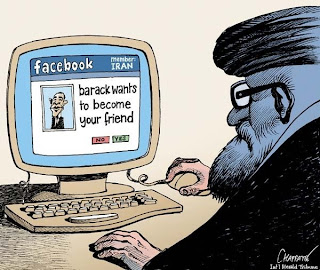
Iran’s political isolation has not always been matched with cultural isolation. Iranians - especially the younger generations - are well tuned to global opinion via the internet. Prior to this year’s elections, the authorities banned access to Facebook, only for this to be lifted. Social networking sites are seen as important in mobilizing the youth vote in these elections, with reformist Mousavi most to gain. The on/off status of Facebook is seen as a dual policy by the Iranian authorities to appeal to the country's youth, but retain control.
An ongoing exhibition at the British Museum depicts the life of Shah Abbas, the ruler of Persia from 1587 to 1629. He established contacts with Europe during his reign, to gain an advantage against the greater enemy – the Ottoman Empire. The ruler would even be mentioned in Shakespeare's Twelfth Night, under the name “the Sophy”. This was the last time in Iran-West relations where a mutual respect and parity was felt by both sides. As European colonial expansion settled in Asia, Iran's purpose was limited to its location as a valuable trade route. This economic relationship would become progressively less favorable to Iran as the decades passed.
Thirty years on from the Iranian revolution, a generation of Iranians exists with little memory of the 20th century Shah - Mohammed Pahlavi, the upheaval during the period of Khomeini’s return or the violence that followed - domestic repression and war with Iraq. The current leadership was born in the fires of those early days of the revolution - where repression mixed with anti-Americanism and Islamism. That revolution was born in economics and social unfairness, then morphed into a religious and totalitarian struggle, but it now might be shifting back to the same old grievances. Ahmadinejad’s one positive selling point is his perceived distance from the stain of political corruption, but he is part of a system that limits power to the few. Iran may be a democracy but the power lies close to Ayatollah Khameini and his inner circle.
The forthcoming elections place the incumbent against two reformers candidates, Mehdi Karroubi and Mir-Hossein Mousavi. In this election, victory will lie not in what is said, but who controls how it is said.
Maybe another revolution is required in Iran - the Green or maybe Carpet Revolution. I think I need to work on these. But given Iran’s repressive internal security, a softer and more subtle revolution would be the only change possible. Internal change by stealth has greater chance of success - there is evidence that this is taking place.
Secular liberals united behind Khomeini in late 1978. The Shah’s authoritarian rule was opposed for its failure to respect the 1906 Iranian constitution. The middle class secular group the Liberation Movement of Iran, led by Mehdi Bazargan, represented the non-religious and moderate force in the revolution. Bazargan was appointed prime minister in February 1979, resigning after the students’ seizure of the American embassy. He represented the moderates: willing to compromise with the Shah’s supporters; opposing Khomeini’s cultural revolution after he resigned.
The brutal consolidation of power by Khomeini’s supporters eliminated these liberal moderate voices and all others for that matter, especially those communist. With the Iranian die cast - the students seizure of the American embassy in Tehran being the starting point - a period of extreme animosity with the West followed. Efforts towards improving relations were thin, but the first attempts were cultural. Now a restoration of these cultural relations have ever chance to empower the present day secular liberals.
In 1998 Iran invited an American wrestling team to Tehran for a tournament. In the same year the two countries played in the World Cup - Iran winning two-one. The Iranian president Mohamed Khatami had proposed a “dialogue of civilizations” in a CNN interview in 1998. Comparing Iran’s revolution to the American one 200 years previous, he suggested some profound similarities: “With our revolution, we are experiencing a new phase of reconstruction of civilization. We feel that what we seek is what the founders of the American civilization were also pursuing four centuries ago. This is why we sense an intellectual affinity with the essence of the American civilization.” Khatami’s reformist tendencies hit plenty of obstacles within Iran’s political system.
Another football march was played in 2000 in the United States. The first visit for many of the Iranians was made as hospitable as possible, with special treatment like exclusion from border fingerprinting regulation.
America's efforts to improve diplomatic relations have not run totally smoothly. The American women's badminton team was refused visas prior to a tournament in February – on a technicality not through an Iranian government block. Iran's team has been invited to the US in July. It might be a mere game of badminton, but given the antipathy that have poisoned US-Iran relations, this does matter.
Since January 2007, more than 75 Iranian athletes have taken part in wrestling, weightlifting, water polo and table tennis competitions in the United States, while 32 American athletes, including 20 wrestlers, have visited Iran, according to the Ettemaad newspaper. A total of 250 Iranian artists, athletes and doctors have made the return visit to the United States, according to the State Department.
Iran’s political isolation has not always been matched with cultural isolation. Iranians - especially the younger generations - are well tuned to global opinion via the internet. Prior to this year’s elections, the authorities banned access to Facebook, only for this to be lifted. Social networking sites are seen as important in mobilizing the youth vote in these elections, with reformist Mousavi most to gain. The on/off status of Facebook is seen as a dual policy by the Iranian authorities to appeal to the country's youth, but retain control.

Another cultural thrust could be from the good old Beeb. The launch of BBC Persia in January will reach 100 million Farsi speakers. The channel is sent to Iran by two satellite dishes but has been declared illegal by the culture minister.
The final wave of soft power came this week in advance of America's 4th July celebrations. American embassies around the world are to invite Iranian representatives for fireworks, hot dogs and hamburgers, to mark America's independence.
So this month's election is finely balanced, reformist Moussavi is leading in the polls, but expect the unexpected. Ahmadinejad will say anything and do anything to stay in power; hardline candidate Mohsen Rezaei has claimed he could stop Israel in “one strike”. Whatever the result, an undercurrent of cultural connections has in many ways made a rapprochement between Iran and the West inevitable.
The final wave of soft power came this week in advance of America's 4th July celebrations. American embassies around the world are to invite Iranian representatives for fireworks, hot dogs and hamburgers, to mark America's independence.
So this month's election is finely balanced, reformist Moussavi is leading in the polls, but expect the unexpected. Ahmadinejad will say anything and do anything to stay in power; hardline candidate Mohsen Rezaei has claimed he could stop Israel in “one strike”. Whatever the result, an undercurrent of cultural connections has in many ways made a rapprochement between Iran and the West inevitable.
Sunday, May 17, 2009
Lebanon's decisive election
Elections in the Middle East are always on a knife edge and the outcomes are often uncertain. So Lebanon and the Middle East await with mild anxiety and optimism the forthcoming elections on June 7. Despite a mild period of reconciliation, Lebanon remains divided and the two sides battling out the election present real contrasts for the Lebanese people and its regional neighbours. The anti-Syrian March 14 movement - a coalition led by secular Sunni Saad Hariri, Druze leader Walid Jumblatt and Christian Maronite Samir Geagea - is pitted against the March 8 Alliance that includes Shia groups Amal and Hezbollah, popular Christian group the Free Patriotic Movement, and smaller Armenian political parties. Secretary of State Clinton's recent visit to Lebanon showed the international community's desire for a peaceful outcome and one that does not include significant gains for the distrusted Hezbollah group. While America negotiates with Syria on regional co-operation, it would be hoping that the Damascus regime's influence does not expand in Lebanon again - Clinton expressed her "support [for] the voices of moderation in Lebanon".
Since the start of the civil war, Lebanon has been a fulcrum in the region - where the forces of fundamental struggle against the secular and the international players battle regional. The consequences of a shift in the balance from one side to the other, in the forthcoming election, is being depicted by regional media and diplomats. Israel anticipates the worst - Syria is typically quiet. Clinton's visit concluded with a reserved judgement, waiting for the composition of the new Lebanese parliament before deciding how to continue their relationship. Significant advances by Syrian backed parties would not cause the same friction, that might have happened during the Bush administration. Diplomatic contacts with Syria and improved Saudi-Syrian relations have reduced the threat of post election confrontation. With the prediction that the election might end in a tie, the United States are taking a pragmatic line.
The role of Syria in Lebanon is still highly contentious. Strong relations with Syria are regarded as vital to Lebanon's national interest, not least by President Fouad Siniora, who has had a strained relationship with Hezbollah since his election as prime minister in 2005. A promotion that came about through anti-Syrian protests. In March, Syria and Lebanon established diplomatic relations, when Damascus appointed its first ambassador to Beirut. But Syria is widely distrusted still and has also been accused of interfering in the forthcoming elections.
The prospect of Hezbollah achieving power in Lebanon is a fearful one for Israel. The militant wing has reportedly replenished and vastly expanded its missile capacity since the 2006 war. Meanwhile it has publicly reiterated its support for Palestinian Islamist group Hamas. Israel has long sought a peace with its northern neighbour, it might have a government that directly opposes any peace, after the elections. Sheikh Hassan Nasrallah has made confident claims about the group's competence for governing: "I tell those who are betting on the [Hezbollah-led] opposition's failure during elections: The resistance that defeated Israel can govern a country that is 100 times larger than Lebanon". But Nasrallah is also speaking the politics of national unity: "We, Hezbollah, have always rejected the division of Lebanon and we shall always maintain this."
A series of arrests of Lebanese on charges of spying for Israel has shown the closeness of the current government and Hezbollah. The counterintelligence capacities of the Lebanese state and indirectly Hezbollah have ironically been boosted by American financial support since 2006. Hezbollah is upping its anti-Israel rhetoric before the election, part brinkmanship - part rallying cry to their voters. Hezbollah's relations with the west are still rife with suspicions, but contacts between the Islamist group and the British foreign office suggest progress is being made.
Bets are on a powersharing fudge between the two sides, held together by President Michel Sleiman. Trusted by most but still anti-Israel. The former commander of the Lebanese Armed Forces stated that "Israel was the enemy" when assuming office last year. This might not be what the international community wants to hear, but he has maintained national unity so far.
The powerbroker in Lebanon could turn out to be Christian Lebanese opposition Gen. Michel Aoun, but he has played a totally contrasting role to Sleiman. Having entered into an alliance with former enemies in 2005, his intention was to hold the balance of power. Now he resists Syrian influence, defends Nasrallah, but still holds the majority Christian support over the parties of Amin Gemayel and Samir Geagea. Aoun and Geagea have a rivalry dating back to the 1980s and the internecine "war of brothers" in 1990. But the Christian population is undecided. Aoun's position shows the contradictions in Lebanese politics - his election posters have been accused of sexism by women's groups. Who would have the greater say in a government of the March 8 Alliance is highly uncertain.
Since the start of the civil war, Lebanon has been a fulcrum in the region - where the forces of fundamental struggle against the secular and the international players battle regional. The consequences of a shift in the balance from one side to the other, in the forthcoming election, is being depicted by regional media and diplomats. Israel anticipates the worst - Syria is typically quiet. Clinton's visit concluded with a reserved judgement, waiting for the composition of the new Lebanese parliament before deciding how to continue their relationship. Significant advances by Syrian backed parties would not cause the same friction, that might have happened during the Bush administration. Diplomatic contacts with Syria and improved Saudi-Syrian relations have reduced the threat of post election confrontation. With the prediction that the election might end in a tie, the United States are taking a pragmatic line.
The role of Syria in Lebanon is still highly contentious. Strong relations with Syria are regarded as vital to Lebanon's national interest, not least by President Fouad Siniora, who has had a strained relationship with Hezbollah since his election as prime minister in 2005. A promotion that came about through anti-Syrian protests. In March, Syria and Lebanon established diplomatic relations, when Damascus appointed its first ambassador to Beirut. But Syria is widely distrusted still and has also been accused of interfering in the forthcoming elections.
The prospect of Hezbollah achieving power in Lebanon is a fearful one for Israel. The militant wing has reportedly replenished and vastly expanded its missile capacity since the 2006 war. Meanwhile it has publicly reiterated its support for Palestinian Islamist group Hamas. Israel has long sought a peace with its northern neighbour, it might have a government that directly opposes any peace, after the elections. Sheikh Hassan Nasrallah has made confident claims about the group's competence for governing: "I tell those who are betting on the [Hezbollah-led] opposition's failure during elections: The resistance that defeated Israel can govern a country that is 100 times larger than Lebanon". But Nasrallah is also speaking the politics of national unity: "We, Hezbollah, have always rejected the division of Lebanon and we shall always maintain this."
A series of arrests of Lebanese on charges of spying for Israel has shown the closeness of the current government and Hezbollah. The counterintelligence capacities of the Lebanese state and indirectly Hezbollah have ironically been boosted by American financial support since 2006. Hezbollah is upping its anti-Israel rhetoric before the election, part brinkmanship - part rallying cry to their voters. Hezbollah's relations with the west are still rife with suspicions, but contacts between the Islamist group and the British foreign office suggest progress is being made.
Bets are on a powersharing fudge between the two sides, held together by President Michel Sleiman. Trusted by most but still anti-Israel. The former commander of the Lebanese Armed Forces stated that "Israel was the enemy" when assuming office last year. This might not be what the international community wants to hear, but he has maintained national unity so far.
The powerbroker in Lebanon could turn out to be Christian Lebanese opposition Gen. Michel Aoun, but he has played a totally contrasting role to Sleiman. Having entered into an alliance with former enemies in 2005, his intention was to hold the balance of power. Now he resists Syrian influence, defends Nasrallah, but still holds the majority Christian support over the parties of Amin Gemayel and Samir Geagea. Aoun and Geagea have a rivalry dating back to the 1980s and the internecine "war of brothers" in 1990. But the Christian population is undecided. Aoun's position shows the contradictions in Lebanese politics - his election posters have been accused of sexism by women's groups. Who would have the greater say in a government of the March 8 Alliance is highly uncertain.
Sunday, March 22, 2009
Backtracking on renewables
This week saw the disappointing decision by Shell to drop its renewable energy schemes. Having marketed itself as a new dynamic force for alternative and clean energy, they have taken a move based purely on money and not much else. Some other companies have taken similar steps: http://www.guardian.co.uk/environment/2009/mar/21/renewable-energy1
Wednesday, March 4, 2009
Dealing with the inevitable
Next week some leading figures within the climate change debate will gather to help formulate America’s policy at the US Climate Action: A Global Economic Perspective symposium. US legislators will be informed by leading academics and businessmen on the options for tackling the causes and consequences of climate change. That this discussion is still needed is worrying in contrasting ways. Not only because the cause and effect is obvious, but also as there is still deep division as to how to deal with the problem. The symposium is a precursor to the United Nations climate conference in Copenhagen in December. The debate on climate change cannot remain in an academic bubble forever. At some point soon, i.e. now, economics and energy security policy will need to be changed to deal with the problem.
A parallel economy has existed for a long time now, involving new technologies that will reduce emissions. But a second parallel economy might be needed as well, one that deals with the consequences of climate change rather than the causes. There is a growing belief that we will have to accept climate change as a fact and limit the damage that it might cause. These inevitable changes will mean radical differences in how the world functions, where populations live and what resources we survive on. The New Scientist spells out in stark terms in its latest issue: in “a world warmed by 4 °C … it may be impossible to return to anything resembling today's varied and abundant Earth…once there is a 4 °C rise, the juggernaut of warming will be unstoppable, and humanity's fate more uncertain than ever.”
The long standing Green opposition to nuclear energy has been one of the first environmental sacred cows to be attacked in recent debate. James Lovelock - proponent of the Gaia hypothesis - was one of the first environmentalists to defy the consensus and argue that nuclear was the only realistic alternative to fossil fuels. That was five years ago and in the meantime the debate has raged, with the government pressing ahead with their nuclear energy policy. But this week four leading environmentalists have broken ranks and reiterated the nuclear case. The issue threatens to split the green movement at a critical moment.
Lovelock has more to say. His conviction is that the earth’s population will peak to 9 billion then plummet to only 1 billion by the end of the century. He also predicts that a permanent changed climate will last 100,000 years. This extremely pessimistic scenario might be extreme, but even if a fraction of his prediction comes true, then the world will be in trouble. His prediction is that a future enviro-catastrophe will resemble the apocalyptic sounding event - Paleocene-Eocene Thermal Maximum (PETM) - of 55 million years ago. He has, kindly, provided some solutions, if you can call them that. Britain, especially, will be a lifeboat of the world, so will be flooded with refugees.
How we adapt our society both in terms of infrastructure and resources is a question that academics, architects and engineers are already looking at. Events like this week’s Ecobuild conference showcase sustainable construction. With such high profile attendees, ideas for restructuring our architectural infrastructure will gain greater momentum. Obviously putting them into practice in a recession is another matter altogether. Likewise rich lists featuring the next generation of eco-entrepreneurs are admirable, but how close these individuals are to central government planning and decision-making is uncertain.
Creating new structures through intelligent engineering was well advocated in an Institution of Mechanical Engineers report - Adapting to the Inevitable. In the energy sector, the report proposes a fundamental move towards the greater decentralisation of energy production, via intelligent local networks, linked with a more internationally interconnected electricity grid to balance supply and demand differences (ie a European ‘supranational’ grid). Sources of water may need to include a higher proportion of underground storage and catchment. Greater levels of desalination may also be required and increased water recycling will become more important. The report believes that buildings adaptation is perhaps the area where most consideration of future climate change has already been made. More specifically effective master planning of urban areas to increase natural and artificial ventilation corridors. Better planned infrastructure is also required to counter possible flooding.
More radical solutions such as geoengineering are also on the cards. With origins in the Cold war and super power research into climate as a weapon, but largely outlawed by the 1970s, geoengineering now acts as a dramatic solution to an out of control problem. Geoengineering could possibly increase the reflectivity of the planet (the albedo) by propelling reflective particles into the upper atmosphere. The idea of aircraft pumping sulfate aerosols into the atmosphere might seem far-fetched to many, but it would reasonably cheap and would be applied by most nations, in contrast to the expensive and heavy investment options for cutting emissions. Scientific groups including NASA and the Royal Society have been evaluating its potential, whilst environmental groups have been cautious in their endorsement, believing that geoengineering could provide disincentives for cutting emissions. The overall effectiveness, predictability and side effects of geoengineering are questioned by the scientific community. Other risks put forward include weaponisation, geoengineering piracy or the rise of an all powerful megalomaniac with the ability to control the weather for his/her own purposes. Geoengineering could one day by the silver bullet to green issues, but until the science is conclusive, no government is going to invest substantially to take it the next step. Many of these issues are set out in an excellent Foreign Affairs essay this month: http://www.foreignaffairs.org/20090301faessay88206-p10/david-g-victor-m-granger-morgan-jay-apt-john-steinbruner-katharine-ricke/the-geoengineering-option.html
A parallel economy has existed for a long time now, involving new technologies that will reduce emissions. But a second parallel economy might be needed as well, one that deals with the consequences of climate change rather than the causes. There is a growing belief that we will have to accept climate change as a fact and limit the damage that it might cause. These inevitable changes will mean radical differences in how the world functions, where populations live and what resources we survive on. The New Scientist spells out in stark terms in its latest issue: in “a world warmed by 4 °C … it may be impossible to return to anything resembling today's varied and abundant Earth…once there is a 4 °C rise, the juggernaut of warming will be unstoppable, and humanity's fate more uncertain than ever.”
The long standing Green opposition to nuclear energy has been one of the first environmental sacred cows to be attacked in recent debate. James Lovelock - proponent of the Gaia hypothesis - was one of the first environmentalists to defy the consensus and argue that nuclear was the only realistic alternative to fossil fuels. That was five years ago and in the meantime the debate has raged, with the government pressing ahead with their nuclear energy policy. But this week four leading environmentalists have broken ranks and reiterated the nuclear case. The issue threatens to split the green movement at a critical moment.
Lovelock has more to say. His conviction is that the earth’s population will peak to 9 billion then plummet to only 1 billion by the end of the century. He also predicts that a permanent changed climate will last 100,000 years. This extremely pessimistic scenario might be extreme, but even if a fraction of his prediction comes true, then the world will be in trouble. His prediction is that a future enviro-catastrophe will resemble the apocalyptic sounding event - Paleocene-Eocene Thermal Maximum (PETM) - of 55 million years ago. He has, kindly, provided some solutions, if you can call them that. Britain, especially, will be a lifeboat of the world, so will be flooded with refugees.
How we adapt our society both in terms of infrastructure and resources is a question that academics, architects and engineers are already looking at. Events like this week’s Ecobuild conference showcase sustainable construction. With such high profile attendees, ideas for restructuring our architectural infrastructure will gain greater momentum. Obviously putting them into practice in a recession is another matter altogether. Likewise rich lists featuring the next generation of eco-entrepreneurs are admirable, but how close these individuals are to central government planning and decision-making is uncertain.
Creating new structures through intelligent engineering was well advocated in an Institution of Mechanical Engineers report - Adapting to the Inevitable. In the energy sector, the report proposes a fundamental move towards the greater decentralisation of energy production, via intelligent local networks, linked with a more internationally interconnected electricity grid to balance supply and demand differences (ie a European ‘supranational’ grid). Sources of water may need to include a higher proportion of underground storage and catchment. Greater levels of desalination may also be required and increased water recycling will become more important. The report believes that buildings adaptation is perhaps the area where most consideration of future climate change has already been made. More specifically effective master planning of urban areas to increase natural and artificial ventilation corridors. Better planned infrastructure is also required to counter possible flooding.
More radical solutions such as geoengineering are also on the cards. With origins in the Cold war and super power research into climate as a weapon, but largely outlawed by the 1970s, geoengineering now acts as a dramatic solution to an out of control problem. Geoengineering could possibly increase the reflectivity of the planet (the albedo) by propelling reflective particles into the upper atmosphere. The idea of aircraft pumping sulfate aerosols into the atmosphere might seem far-fetched to many, but it would reasonably cheap and would be applied by most nations, in contrast to the expensive and heavy investment options for cutting emissions. Scientific groups including NASA and the Royal Society have been evaluating its potential, whilst environmental groups have been cautious in their endorsement, believing that geoengineering could provide disincentives for cutting emissions. The overall effectiveness, predictability and side effects of geoengineering are questioned by the scientific community. Other risks put forward include weaponisation, geoengineering piracy or the rise of an all powerful megalomaniac with the ability to control the weather for his/her own purposes. Geoengineering could one day by the silver bullet to green issues, but until the science is conclusive, no government is going to invest substantially to take it the next step. Many of these issues are set out in an excellent Foreign Affairs essay this month: http://www.foreignaffairs.org/20090301faessay88206-p10/david-g-victor-m-granger-morgan-jay-apt-john-steinbruner-katharine-ricke/the-geoengineering-option.html
Monday, January 26, 2009
A change of climate you can believe in
At this moment in time, it probably ranks about third place in his in-tray, behind the economy and two ongoing wars. But the environment, to many, easily surpasses these two dominant problems. To effectively tackle climate change, President Obama will need two things: money and political will. Unfortunately he doesn’t have the former yet but an economic recovery will see to that. The political will is there, but Americans fear terrorism and nuclear conflict over climate change at this moment in time. Dealing with these two threats will force the possibility of environmental disaster up the domestic agenda. To many, climate change represents a superior threat, but reflecting the problems facing the United States, it is languishing in third at the moment.
Obama has hit the ground running on every other issue, and today it was the environment. Reversing years of Bush neglect, Obama has embarked on a sweeping range of policies to cut emissions. These include allowing individual states to set their own limits of emissions and imposing fuel efficiency standard on the nation‘s carmakers. Obama also reiterated his campaign pledge to reduce US dependence on foreign oil.
The Obama administration has set out a comprehensive New Energy for America plan. This will create five million new jobs by strategically investing $150 billion in clean technology; significantly reduce imports from the Middle East and Venezuela; expand plug-in Hybrid cars throughout the US; increase the proportion of electricity from renewable sources; develop an economy-wide cap-and-trade program to reduce greenhouse gas emissions 80 percent by 2050. The first aspect of this plan: job creation and economic development is a masterstroke. It will clearly help America out of the recession, but it also appeals to those American capitalist ideals - enterprise and wealth creation. The Obama plan could create a first generation of enviro-capitalists.
The holy green nexus of clean technology and commerce represents a future for the American economy. It has been noticed by wealthy Arab states, who are embarking on similar projects. Is this the solution to the two critical problems of the day? Climate change and economic uncertainty.
The response to this challenge is due to be included in his $825bn stimulus package. The dire state of the US economy will mean tight restrictions on emissions may not be feasible, at this moment in time at least. Carmakers are also in a dire financial position, so imposing fuel efficiency regulations will also be difficult.
The last eight years have been full of frustration and inaction. The tone for the next four (and hopefully eight) years has been set. Shortly after his election victory, Obama was unequivocal: “Now is the time to confront this challenge once and for all, delay is no longer an option. Denial is no longer an acceptable response.” In his inauguration speech he emphasised that the United States would "roll back the spectre of a warming planet" and "restore science to its rightful place and wield technology's wonders to raise healthcare's quality and lower its cost[…]harness the sun and the winds and the soil to fuel our cars and run our factories.” This direct message contrasts to UK environmental policy which seems at best contradictory and counterproductive, at worse linked to big business interests.
Creating a successor to the Kyoto Protocol will be a priority for Obama. The next global gathering in 2009 is the United Nations Climate Change Conference in Copenhagen in December. This might be too long to wait. Domestically any agreement through Congress may be difficult. Republican opposition might be added to by Democrats, wary of the impact on employment and the economy, especially in blue collar states.
One key difference between this administration and the previous - when it comes to the environment - is its indebtedness to corporate interests. Whereas the Bush administration was beholden to oil corporates, as seen in his campaigns where the vast majority of donations came from corporate executives and in some extremely dubious influence on energy policy by oil companies like Exxon Mobil. Obama pursued a grass roots fundraising strategy and his corporate links lie in technology, banking and universities.
The final development of energy policy under Obama is the change of personnel within DoE. The new Secretary Steven Chu is a strong advocate of alternative energy and nuclear, as an alternative to fossil fuels. Placing a Nobel winning scientist at the heart of energy policy shows that ideology and cronyism no longer will determine decisions in this critical department. Scientific fact will be the new mantra. The State department will also have a climate change envoy and, who knows, Al Gore might even be asked to help.
Obama has hit the ground running on every other issue, and today it was the environment. Reversing years of Bush neglect, Obama has embarked on a sweeping range of policies to cut emissions. These include allowing individual states to set their own limits of emissions and imposing fuel efficiency standard on the nation‘s carmakers. Obama also reiterated his campaign pledge to reduce US dependence on foreign oil.
The Obama administration has set out a comprehensive New Energy for America plan. This will create five million new jobs by strategically investing $150 billion in clean technology; significantly reduce imports from the Middle East and Venezuela; expand plug-in Hybrid cars throughout the US; increase the proportion of electricity from renewable sources; develop an economy-wide cap-and-trade program to reduce greenhouse gas emissions 80 percent by 2050. The first aspect of this plan: job creation and economic development is a masterstroke. It will clearly help America out of the recession, but it also appeals to those American capitalist ideals - enterprise and wealth creation. The Obama plan could create a first generation of enviro-capitalists.
The holy green nexus of clean technology and commerce represents a future for the American economy. It has been noticed by wealthy Arab states, who are embarking on similar projects. Is this the solution to the two critical problems of the day? Climate change and economic uncertainty.
The response to this challenge is due to be included in his $825bn stimulus package. The dire state of the US economy will mean tight restrictions on emissions may not be feasible, at this moment in time at least. Carmakers are also in a dire financial position, so imposing fuel efficiency regulations will also be difficult.
The last eight years have been full of frustration and inaction. The tone for the next four (and hopefully eight) years has been set. Shortly after his election victory, Obama was unequivocal: “Now is the time to confront this challenge once and for all, delay is no longer an option. Denial is no longer an acceptable response.” In his inauguration speech he emphasised that the United States would "roll back the spectre of a warming planet" and "restore science to its rightful place and wield technology's wonders to raise healthcare's quality and lower its cost[…]harness the sun and the winds and the soil to fuel our cars and run our factories.” This direct message contrasts to UK environmental policy which seems at best contradictory and counterproductive, at worse linked to big business interests.
Creating a successor to the Kyoto Protocol will be a priority for Obama. The next global gathering in 2009 is the United Nations Climate Change Conference in Copenhagen in December. This might be too long to wait. Domestically any agreement through Congress may be difficult. Republican opposition might be added to by Democrats, wary of the impact on employment and the economy, especially in blue collar states.
One key difference between this administration and the previous - when it comes to the environment - is its indebtedness to corporate interests. Whereas the Bush administration was beholden to oil corporates, as seen in his campaigns where the vast majority of donations came from corporate executives and in some extremely dubious influence on energy policy by oil companies like Exxon Mobil. Obama pursued a grass roots fundraising strategy and his corporate links lie in technology, banking and universities.
The final development of energy policy under Obama is the change of personnel within DoE. The new Secretary Steven Chu is a strong advocate of alternative energy and nuclear, as an alternative to fossil fuels. Placing a Nobel winning scientist at the heart of energy policy shows that ideology and cronyism no longer will determine decisions in this critical department. Scientific fact will be the new mantra. The State department will also have a climate change envoy and, who knows, Al Gore might even be asked to help.
Sunday, January 25, 2009
Blessed are the peacemakers
In another highly assertive statement of diplomatic intent, President Obama has appointed two envoys for the two foreign policy priorities of his administration. Richard Holbrooke will be special envoy for Afghanistan and Pakistan, while George Mitchell will seek peace between the Arabs and Israelis. The task facing these two highly experienced diplomats cannot be underestimated. But within the Democrat foreign policy establishment, these two individuals have the strongest CVs.
Holbrooke has a long career of government service, dating back to the early 1960s. His posts included formulating Vietnam policy, State department East Asian and Near Pacific, and Ambassador to Germany and the United Nations. He has also had senior roles in investment banking, academia and international NGOs. But he is probably best known as the chief architect of the Dayton Peace Accords in 1995. Achieving a lasting peace in the Balkans after the worst conflict in post War Europe was no mean feat. Although Milosevic remained in power and led Serbia into another war in Kosovo in 1999, these accords have held since. Co-ordinating a peace between the Taliban, Afghan army and NATO will be equally difficult, especially when one party - the Taliban - is uncompromising and seeks no form of negotiation. But at some point, the Western forces might have to sit down with some unpleasant figures. Having dealt with those responsible for ethnic cleansing and genocide in the Balkans, Holbrooke has the necessary experience.
Obama stated in his inauguration speech that a “peace” would be sought in Afghanistan. The model may be the Balkans, where a vast international armed force flooded the region and secured a peace. The failures in Afghanistan have been down to insufficient troops - allowing the Taliban to regroup, Holbrooke and Obama intend to counter these past mistakes without making new ones. A lack of diplomatic focus on the region was also a major fault in Bush policy for South Asia, especially from 2003 to 2006, as Iraq dominated American foreign policy. But Holbrooke sees a regional solution, as set out in a recent Foreign Affairs essay: “Afghanistan's future cannot be secured by a counterinsurgency effort alone; it will also require regional agreements that give Afghanistan's neighbors a stake in the settlement. That includes Iran -- as well as China, India, and Russia,” and of course Pakistan. He identifies four critical areas: “the tribal areas in Pakistan, the drug lords who dominate the Afghan system, the national police, and the incompetence and corruption of the Afghan government.”
An equally intractable war was the crowning achievement of George Mitchell. His work as Special Envoy to Northern Ireland during the Clinton Administration led to the Good Friday Agreement in 1998. Half Lebanese, Mitchell has a similarly long and distinguished career in public service. A senator for many years and also bizarrely chairman of Disney, he also led international law firm DLA Piper - probably good experience given the number of legal conundrums thrown up by the Middle East conflict. The parallels between Northern Ireland and Palestine have often been raised, as a source of conflict resolution. The comparison is often rejected by Israelis who see Hamas’ statements calling for the destruction of Israel as a totally different order to the IRA. But just as the IRA had a grudging support in Republican communities, Hamas has a similar position with the Palestinians. They may be thugs, but at least they stand up for you. For the West, the parallel is clear. We eventually dealt with the IRA, despite years of denouncements. We may well have to deal with Hamas, as a democratically elected movement. Critically Mitchell has the background to be respected by both sides - he seems the most logical and best choice for this extremely difficult role.
Holbrooke has a long career of government service, dating back to the early 1960s. His posts included formulating Vietnam policy, State department East Asian and Near Pacific, and Ambassador to Germany and the United Nations. He has also had senior roles in investment banking, academia and international NGOs. But he is probably best known as the chief architect of the Dayton Peace Accords in 1995. Achieving a lasting peace in the Balkans after the worst conflict in post War Europe was no mean feat. Although Milosevic remained in power and led Serbia into another war in Kosovo in 1999, these accords have held since. Co-ordinating a peace between the Taliban, Afghan army and NATO will be equally difficult, especially when one party - the Taliban - is uncompromising and seeks no form of negotiation. But at some point, the Western forces might have to sit down with some unpleasant figures. Having dealt with those responsible for ethnic cleansing and genocide in the Balkans, Holbrooke has the necessary experience.
Obama stated in his inauguration speech that a “peace” would be sought in Afghanistan. The model may be the Balkans, where a vast international armed force flooded the region and secured a peace. The failures in Afghanistan have been down to insufficient troops - allowing the Taliban to regroup, Holbrooke and Obama intend to counter these past mistakes without making new ones. A lack of diplomatic focus on the region was also a major fault in Bush policy for South Asia, especially from 2003 to 2006, as Iraq dominated American foreign policy. But Holbrooke sees a regional solution, as set out in a recent Foreign Affairs essay: “Afghanistan's future cannot be secured by a counterinsurgency effort alone; it will also require regional agreements that give Afghanistan's neighbors a stake in the settlement. That includes Iran -- as well as China, India, and Russia,” and of course Pakistan. He identifies four critical areas: “the tribal areas in Pakistan, the drug lords who dominate the Afghan system, the national police, and the incompetence and corruption of the Afghan government.”
An equally intractable war was the crowning achievement of George Mitchell. His work as Special Envoy to Northern Ireland during the Clinton Administration led to the Good Friday Agreement in 1998. Half Lebanese, Mitchell has a similarly long and distinguished career in public service. A senator for many years and also bizarrely chairman of Disney, he also led international law firm DLA Piper - probably good experience given the number of legal conundrums thrown up by the Middle East conflict. The parallels between Northern Ireland and Palestine have often been raised, as a source of conflict resolution. The comparison is often rejected by Israelis who see Hamas’ statements calling for the destruction of Israel as a totally different order to the IRA. But just as the IRA had a grudging support in Republican communities, Hamas has a similar position with the Palestinians. They may be thugs, but at least they stand up for you. For the West, the parallel is clear. We eventually dealt with the IRA, despite years of denouncements. We may well have to deal with Hamas, as a democratically elected movement. Critically Mitchell has the background to be respected by both sides - he seems the most logical and best choice for this extremely difficult role.
Tuesday, January 20, 2009
Gaza - amid the rubble
So the dust settles in Gaza, and looking at the footage that is emerging, there are tonnes of it. Both sides are claiming victory, even though deep down neither believes it. And neither does the outside world for that matter. The Israeli military claim that 25% of the 1,300 plus casualties were Hamas militants; Hamas stated today that as few as 48 of its gunmen had been killed. Hamas may not have portrayed themselves as anything other than a uncompromising militant group, but Israel’s image on balance has taken a serious blow. Global protests are one thing, are expected and dismissed, but the possibility of a war crimes investigation by the UN is a different matter. Israel has made unprecedented efforts to put their case to the international media. But the spin doctors have been working overtime to justify Israel’s brutal onslaught. Amidst this confusion on the ground, a regional picture has become equally cloudy. The neighbouring states have lined up against each other in their political battles for regional hegemony. Nobody has gained from this three week crisis.
The Israeli PR machine has consistently sought to portray Hamas as a militant organisation, hell-bent on Israel’s destruction, a proxy of Iran, a threat to its own people. Israel has been simply defending itself against rocket fire, even though most of the rockets prior to the end of the ceasefire on December 20 had been fired by non-Hamas militants like Islamic Jihad. This cassus belli had a cogent argument, but the disproportionality of their response has quickly undermined their reasoning. The obscene numbers of children, women and innocents killed has put Israel on the PR defensive.
Hamas for their part have missed the opportunity to gain positive PR. Lacking the professional expertise and of course being under siege, they have been unable to define themselves as a legitimate resistance movement to the outside world and alter prejudices about what they stand for. Their pronouncements have appeared quite far fetched. Not quite in the Comical Ali mould, but threats have come to nothing, Israeli troops haven’t died in the predicted numbers. Their supposed military prowess seems to have turned out to be a paper tiger. The problem in assessing claims has been partly caused by Israel’s ban on foreign journalists. But it is also not unlikely that Hamas have exaggerated their relative strength to prove their worth to the Palestinian population. It does seem probable that their personnel has not been depleted, a large proportion of their arms have been destroyed, and their political and social infrastructure has been severely hit. However they may have held back in the face of Israeli military superiority.
It has been left to foreign experts to cast some insight. Sir Jeremy Greenstock was clear in his analysis of Hamas, having had contacts through the Forward Thinking thinktank. Hamas did not advocate the total destruction of Israel; their notorious charter, written in 1987, had never been put into practice; they were not controlled by Iran; and their rule did not resemble the Taliban. Israel has been sharp in its linking of Hamas with the war on terror and Iranian designs for regional hegemony. Not convincing arguments, but they’ve stuck to it and it was convincing enough to gain unequivocal American backing.
Most of Israel’s wars have a political dynamic both nationally and internationally, but this conflict has been remarkably and cynically shaped by such forces. The four dominant personalities in Israeli politics have all seen their fortunes shaped by this war in different ways. Ehud Olmert seeks redemption, before he steps down, for his appalling handling of the 2006 Lebanon war. Benjamin Netanyahu has egged the government on and raised Israeli hopes of a comprehensive defeat of Hamas. The ambiguous result will now aid his election prospects. Tzipi Livni has needed a war to prove her hardline credentials. And Ehud Barak, acting as Defence chief, knows that a good war for him, will provide a guaranteed place in any Labour-Kadima coalition. The forthcoming Israeli election has been vital to this war’s destiny, as has the imminent inauguration of President Obama. The ceasefire has happened just in time to not overshadow this momentous day in American history. It is hard to know how this war would have developed without this political context, or whether it would have happened at all.
So we are now at the status quo ante, but with more hatred and fear on both sides. Israeli politics is just as opaque and divided. The war and its failure to eliminate Hamas will strengthen extremist political forces, like Avigdor Lieberman, who equates the war in Gaza to the American war on Japan in 1945, and the enforced surrender rather than occupation. His comments are extreme, but they reflect a pervasive fear among Israelis, surrounded by enemies, with little sentiment for Palestinian suffering. “They brought it upon themselves” is the common Israeli viewpoint. Just as extremists on the Palestinian side reject the idea of an Israeli state, Israeli far right leaders promote equally uncompromising policies. Thankfully the Israeli Supreme Court has overturned a decision to ban two leading Israeli Arab political parties from the Knesset and the forthcoming elections. Israeli democracy is as shaky as Palestinian.
And what now for the Palestinians? Hamas looks likely to remain in power in Gaza and unless there is a settlement with Fatah, negotiations will still be stuck in a “three state solution”. Palestinian president Mahmoud Abbas’s position is fragile with little popular support and reports from Gaza tell of a brutal renewal of internecine warfare. Has popular support for Hamas dropped? They have brought violence to the strip, but their message of defiance strikes a chord with every Palestinian.
The regional picture is even more confused. Two apparent sides have formed from the crisis, holding two parallel summits to discuss the crisis. Fatah, Saudi Arabia and Egypt are together on the pro-West position; Syria, Iran and Qatar have met Hamas representatives. Both sides offer totally opposing views on who is responsible for the conflict, but both, thankfully, seem united in providing financial support for reconstruction. This is nothing new. Arab states have often used the Palestinian issue to advance their positions in the region. The Obama administration’s quest for Middle East diplomacy will be even harder with such a division. However a clue to how Obama will tackle the Israeli-Palestinian conflict lies in this regional political quagmire. An all encompassing regional solution involving not only this conflict, but peace in Iraq and Iran's nuclear plans, is being touted as Obama's intention.
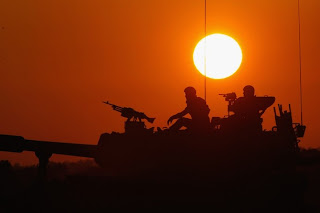
The Israeli PR machine has consistently sought to portray Hamas as a militant organisation, hell-bent on Israel’s destruction, a proxy of Iran, a threat to its own people. Israel has been simply defending itself against rocket fire, even though most of the rockets prior to the end of the ceasefire on December 20 had been fired by non-Hamas militants like Islamic Jihad. This cassus belli had a cogent argument, but the disproportionality of their response has quickly undermined their reasoning. The obscene numbers of children, women and innocents killed has put Israel on the PR defensive.
Hamas for their part have missed the opportunity to gain positive PR. Lacking the professional expertise and of course being under siege, they have been unable to define themselves as a legitimate resistance movement to the outside world and alter prejudices about what they stand for. Their pronouncements have appeared quite far fetched. Not quite in the Comical Ali mould, but threats have come to nothing, Israeli troops haven’t died in the predicted numbers. Their supposed military prowess seems to have turned out to be a paper tiger. The problem in assessing claims has been partly caused by Israel’s ban on foreign journalists. But it is also not unlikely that Hamas have exaggerated their relative strength to prove their worth to the Palestinian population. It does seem probable that their personnel has not been depleted, a large proportion of their arms have been destroyed, and their political and social infrastructure has been severely hit. However they may have held back in the face of Israeli military superiority.
It has been left to foreign experts to cast some insight. Sir Jeremy Greenstock was clear in his analysis of Hamas, having had contacts through the Forward Thinking thinktank. Hamas did not advocate the total destruction of Israel; their notorious charter, written in 1987, had never been put into practice; they were not controlled by Iran; and their rule did not resemble the Taliban. Israel has been sharp in its linking of Hamas with the war on terror and Iranian designs for regional hegemony. Not convincing arguments, but they’ve stuck to it and it was convincing enough to gain unequivocal American backing.
Most of Israel’s wars have a political dynamic both nationally and internationally, but this conflict has been remarkably and cynically shaped by such forces. The four dominant personalities in Israeli politics have all seen their fortunes shaped by this war in different ways. Ehud Olmert seeks redemption, before he steps down, for his appalling handling of the 2006 Lebanon war. Benjamin Netanyahu has egged the government on and raised Israeli hopes of a comprehensive defeat of Hamas. The ambiguous result will now aid his election prospects. Tzipi Livni has needed a war to prove her hardline credentials. And Ehud Barak, acting as Defence chief, knows that a good war for him, will provide a guaranteed place in any Labour-Kadima coalition. The forthcoming Israeli election has been vital to this war’s destiny, as has the imminent inauguration of President Obama. The ceasefire has happened just in time to not overshadow this momentous day in American history. It is hard to know how this war would have developed without this political context, or whether it would have happened at all.
So we are now at the status quo ante, but with more hatred and fear on both sides. Israeli politics is just as opaque and divided. The war and its failure to eliminate Hamas will strengthen extremist political forces, like Avigdor Lieberman, who equates the war in Gaza to the American war on Japan in 1945, and the enforced surrender rather than occupation. His comments are extreme, but they reflect a pervasive fear among Israelis, surrounded by enemies, with little sentiment for Palestinian suffering. “They brought it upon themselves” is the common Israeli viewpoint. Just as extremists on the Palestinian side reject the idea of an Israeli state, Israeli far right leaders promote equally uncompromising policies. Thankfully the Israeli Supreme Court has overturned a decision to ban two leading Israeli Arab political parties from the Knesset and the forthcoming elections. Israeli democracy is as shaky as Palestinian.
And what now for the Palestinians? Hamas looks likely to remain in power in Gaza and unless there is a settlement with Fatah, negotiations will still be stuck in a “three state solution”. Palestinian president Mahmoud Abbas’s position is fragile with little popular support and reports from Gaza tell of a brutal renewal of internecine warfare. Has popular support for Hamas dropped? They have brought violence to the strip, but their message of defiance strikes a chord with every Palestinian.
The regional picture is even more confused. Two apparent sides have formed from the crisis, holding two parallel summits to discuss the crisis. Fatah, Saudi Arabia and Egypt are together on the pro-West position; Syria, Iran and Qatar have met Hamas representatives. Both sides offer totally opposing views on who is responsible for the conflict, but both, thankfully, seem united in providing financial support for reconstruction. This is nothing new. Arab states have often used the Palestinian issue to advance their positions in the region. The Obama administration’s quest for Middle East diplomacy will be even harder with such a division. However a clue to how Obama will tackle the Israeli-Palestinian conflict lies in this regional political quagmire. An all encompassing regional solution involving not only this conflict, but peace in Iraq and Iran's nuclear plans, is being touted as Obama's intention.

Tuesday, December 30, 2008
2008 - A step closer to the abyss
"Once more unto the breach, dear friends, once more" - the world slips closer to the edge of the precipice, but once more we seem to have been reprieved. This cannot go on indefinitely. The lesson of 2008 is that we have edged closer to self-destruction through war, climate and finance, but the world still has an opportunity to fix itself. The wars in Afghanistan and Iraq have been as bad as they could be, but hope of peace is still there. There has been total inaction on climate change this year, but environmentalist movements are as close to government decision makers as ever. The global economy has taken a battering throughout 2008, but has not touched large sections of society.
Another theme of 2008 has been how unresolved regional issues that have simmered have got close to breaking point. These might include Zimbabwe's internal crisis, Russia's short war in Georgia, the protests for democracy in Tibet or the latest Israeli onslaught on Hamas. This reflects badly on the international community as well as those involved. Internal matters are internal matters and there is a limit to what the outside world can do. But a failure to have united positions on issues like Georgia’s NATO membership or vast differences between southern African and European relations with Robert Mugabe have made the international community powerless.
It’s hard to find some positives in 2008, but three events stick out. The Beijing Olympics were very controversial, with questions on censorship, pollution and Tibet scrutinised in the build up. How China will develop as a country and an international actor is still unclear. But the Olympics was a positive step, showing what China can add, rather than what negatives it might have. In September CERN scientists in Geneva launched the Large Hadron Collider, firing protons around a 27 kilometre ring and recreating the Big Bang. Science is one thing that the world is getting right at the moment, and if the same efforts were put into resolving conflict and poverty, the world would be far better off. Finally, it had to be, the one and only. Barack Obama will inevitably disappoint some in the next four years and many of his plans will not work out as planned - that’s the nature of politics. But November 4 was a great day for the optimists. Here are a few summaries on 2008.
Global Economy
2008 was a devastating year for global economics and the financial sector - with a mere $14 trillion wiped off world share values. From September onwards, the state of the global economy, in particular the financial sector has been a dominant issue. The bringing of American mortgage firms Fannie Mae and Freddie Mac in public ownership was followed by the bankruptcy of Lehman Brothers and the sale of the greatly reduced in value Merrill Lynch. The subprime mortgage crisis of 2007 morphed into the financial crisis of 2008 at this point, since when a tsunami of financial turmoil has followed. The crisis in banking has impacted on most of areas of the economy and has brought the onset of a global recession. The relationship between governments and the free market has been profoundly altered by this crisis. Banks are essential for business, commerce and industry, so a bailout can be justified, even though it was their incompetence that created the mess. A reform of the financial system is promised, but on whose terms - the governments, the taxpayers or the bankers?
Meanwhile, not unrelated, food and energy prices soared in the first half of the year. Food prices increased through many interlinked factors or a “perfect storm“: increased biofuel production; changes in diet in China and India to resource intensive food; higher oil prices impacting on fertilizers and food production; natural disasters like Cyclone Nargis that caused a spike in rice prices. But thanks to the global recession and fall in world demand, food prices are now falling again. Although the credit crunch might impact on farmers production capabilities, causing another surge in prices.
The fluctuating of oil prices throughout 2008 has been one of the year’s most curious economic stories. Prices soared over $100 for the first time in January, and then hit a record $147.27 in July. Prices had been increasing at a gathering rate throughout the decade, but Tensions in the Middle East, increased demand in China and India and a fall in the dollar’s value all contributed to this spike. However just as environmentalists had a minor celebration, hoping that this new era of higher petrol prices would reduce car usage and emissions. And just as governments were talking of pushing the alternative energy agenda further, the global recession brought prices back down again. The rich producer states have invested this incredible boon back into green projects, but will this be enough? Its good PR but expanding these advances in clean technology across the globe will take a long time. The world’s dependency on oil and its role in numerous global issues was reiterated again in 2008.
South Asia
If one area of the globe had a bad year, it was South Asia. 2007 had been a bad year for Pakistan, 2008 was worse. The ongoing conflict in its north westerly border with Taliban militants escalated through the year - air strikes by American unmanned drones raised the temperature further. Pakistan’s chaotic political system took one step forward - with the resignation of the unpopular General Musharraf. This was replaced by the combined PPP leadership of prime minister Yousaf Raza Gillani and president Asif Ali Zardari, widower of Benazir Bhutto. Zardari - also known as Mr 10% - is an unlikely saviour for Pakistan. Deeply unpopular with large parts of the population and faced with a worsening security situation, his chances of success appear slim.
Pakistan’s year was just as bad as Afghanistan, where the decline in security has led to a proposed increase in US troops. The so-called Iraqisation of the conflict, complete absence of political authority and an ongoing humanitarian crisis has made Afghanistan worse than ever. Achieving stability in Pakistan first and securing the border seems a likely solution, but this region is so lawless and uncontrollable, that quick progress is very unlikely soon. A General Petraeus led “Sons of Afghanistan” strategy has been hinted at. But 2008 may well be the year that Afghanistan became unsolvable.
India had escaped this maelstrom for most of the year. Domestic terrorism - linked to the Students Islamic Movement of India and Naxalite groups - had occurred throughout the year, but India’s perilous position so close to this chaos was only fully revealed by the November Mumbai attacks. The Mumbai atrocities proved that India still faced a far from resolved situation in Kashmir and that it was on the frontline in the war against Islamic extremism in northern Pakistan. Lashkar-e-Taiba has liberation of Kashmir as its founding objective, but diverting the Pakistani military from its war against the Taliban in the north, was an additional objective from the attacks.
Pakistan is therefore the key country in the region and probably wins the unwanted end of year prize for most dangerous country of 2008. Obama will focus attention on Pakistan after January. It has become a launch pad for attacks on both its neighbours. British intelligence believes that the majority of terrorist plots in the UK are born there. And just to make things worse, it has nuclear weapons.
On a positive note, India has made further progress in securing its position as a leading economic power. If India can cope with the global recession, then it could - alongside China - dominate the next decade. The rise of the Indian billionaires; the immense Indian middle class and their purchasing power; confident expansions abroad, as seen by Tata’s buyout of Jaguar, reflect this upward growth.
Americas
Two questions have dominated American politics in 2008: who will be the next President and what will happen to the economy? The longest, most expensive and most historical election ever kept America in stasis all year. With the current administration out of ideas and with no agenda, their sole objectives were to not make life too difficult for John McCain and to limit the damage from the economic downturn. The official transition might only have started after Obama’s victory in November, but a transition has been in place since the start of the year. Some President’s - notably Clinton - use their remaining time for shuttle diplomacy and end of term initiatives. The Bush presidency has had a slow death since late 2006. Iraq, the defining issue of the last 8 years, has moved to just about bearable situation for Bush to leave on. The economic problems have either been dealt with by bipartisan cooperation or left half resolved for Obama to pick up (in particular the proposed bailout of the car industry). 2008 was a year of change for America, but not a year of action.
South of the border and into Latin America, many questions are unanswered. How will the region cope with a global downturn? Will left wing governments maintain their ascendancy? Whilst Fidel Castro stepped down after half a century, Hugo Chavez looked set to fulfil his ambition as US - antagoniser in chief in the region. The failure of the Bush administration to effectively engage in the region has presented openings for China and Russia to strengthen ties. Latin American leaders are not only looking for new alliances, but they are also strengthening cooperation across the continent.
The problems that have characterised Latin America still exist though. Drug trafficking on a vast scale still has a deep impact on society and politics from Colombia north to Mexico. In the latter, brutal and gruesome gang wars threaten to consume the whole state. With such narco-power, gangs in Mexico have turned the country into a northerly version of Colombia. Corrupt politicians have allowed the traffickers to become a real threat to the state. The drug wars in Latin America have simmered for a long time, they reached a dangerous point in 2008, next year will probably be worse. President Obama might face one of his worst crises just south of the border.
Environment
One step forward, one step back was the theme for the environment in 2008. Governments claim that they have introduced a range of measures to cut emissions and made the changes necessary for society to tackle climate change. Activists will claim that these measures have not gone far enough and that other actions - like proposed extra runways or nuclear power stations - are at best counterproductive, at worse a major step backwards.
Another theme of 2008 has been how unresolved regional issues that have simmered have got close to breaking point. These might include Zimbabwe's internal crisis, Russia's short war in Georgia, the protests for democracy in Tibet or the latest Israeli onslaught on Hamas. This reflects badly on the international community as well as those involved. Internal matters are internal matters and there is a limit to what the outside world can do. But a failure to have united positions on issues like Georgia’s NATO membership or vast differences between southern African and European relations with Robert Mugabe have made the international community powerless.
It’s hard to find some positives in 2008, but three events stick out. The Beijing Olympics were very controversial, with questions on censorship, pollution and Tibet scrutinised in the build up. How China will develop as a country and an international actor is still unclear. But the Olympics was a positive step, showing what China can add, rather than what negatives it might have. In September CERN scientists in Geneva launched the Large Hadron Collider, firing protons around a 27 kilometre ring and recreating the Big Bang. Science is one thing that the world is getting right at the moment, and if the same efforts were put into resolving conflict and poverty, the world would be far better off. Finally, it had to be, the one and only. Barack Obama will inevitably disappoint some in the next four years and many of his plans will not work out as planned - that’s the nature of politics. But November 4 was a great day for the optimists. Here are a few summaries on 2008.
Global Economy
2008 was a devastating year for global economics and the financial sector - with a mere $14 trillion wiped off world share values. From September onwards, the state of the global economy, in particular the financial sector has been a dominant issue. The bringing of American mortgage firms Fannie Mae and Freddie Mac in public ownership was followed by the bankruptcy of Lehman Brothers and the sale of the greatly reduced in value Merrill Lynch. The subprime mortgage crisis of 2007 morphed into the financial crisis of 2008 at this point, since when a tsunami of financial turmoil has followed. The crisis in banking has impacted on most of areas of the economy and has brought the onset of a global recession. The relationship between governments and the free market has been profoundly altered by this crisis. Banks are essential for business, commerce and industry, so a bailout can be justified, even though it was their incompetence that created the mess. A reform of the financial system is promised, but on whose terms - the governments, the taxpayers or the bankers?
Meanwhile, not unrelated, food and energy prices soared in the first half of the year. Food prices increased through many interlinked factors or a “perfect storm“: increased biofuel production; changes in diet in China and India to resource intensive food; higher oil prices impacting on fertilizers and food production; natural disasters like Cyclone Nargis that caused a spike in rice prices. But thanks to the global recession and fall in world demand, food prices are now falling again. Although the credit crunch might impact on farmers production capabilities, causing another surge in prices.
The fluctuating of oil prices throughout 2008 has been one of the year’s most curious economic stories. Prices soared over $100 for the first time in January, and then hit a record $147.27 in July. Prices had been increasing at a gathering rate throughout the decade, but Tensions in the Middle East, increased demand in China and India and a fall in the dollar’s value all contributed to this spike. However just as environmentalists had a minor celebration, hoping that this new era of higher petrol prices would reduce car usage and emissions. And just as governments were talking of pushing the alternative energy agenda further, the global recession brought prices back down again. The rich producer states have invested this incredible boon back into green projects, but will this be enough? Its good PR but expanding these advances in clean technology across the globe will take a long time. The world’s dependency on oil and its role in numerous global issues was reiterated again in 2008.
South Asia
If one area of the globe had a bad year, it was South Asia. 2007 had been a bad year for Pakistan, 2008 was worse. The ongoing conflict in its north westerly border with Taliban militants escalated through the year - air strikes by American unmanned drones raised the temperature further. Pakistan’s chaotic political system took one step forward - with the resignation of the unpopular General Musharraf. This was replaced by the combined PPP leadership of prime minister Yousaf Raza Gillani and president Asif Ali Zardari, widower of Benazir Bhutto. Zardari - also known as Mr 10% - is an unlikely saviour for Pakistan. Deeply unpopular with large parts of the population and faced with a worsening security situation, his chances of success appear slim.
Pakistan’s year was just as bad as Afghanistan, where the decline in security has led to a proposed increase in US troops. The so-called Iraqisation of the conflict, complete absence of political authority and an ongoing humanitarian crisis has made Afghanistan worse than ever. Achieving stability in Pakistan first and securing the border seems a likely solution, but this region is so lawless and uncontrollable, that quick progress is very unlikely soon. A General Petraeus led “Sons of Afghanistan” strategy has been hinted at. But 2008 may well be the year that Afghanistan became unsolvable.
India had escaped this maelstrom for most of the year. Domestic terrorism - linked to the Students Islamic Movement of India and Naxalite groups - had occurred throughout the year, but India’s perilous position so close to this chaos was only fully revealed by the November Mumbai attacks. The Mumbai atrocities proved that India still faced a far from resolved situation in Kashmir and that it was on the frontline in the war against Islamic extremism in northern Pakistan. Lashkar-e-Taiba has liberation of Kashmir as its founding objective, but diverting the Pakistani military from its war against the Taliban in the north, was an additional objective from the attacks.
Pakistan is therefore the key country in the region and probably wins the unwanted end of year prize for most dangerous country of 2008. Obama will focus attention on Pakistan after January. It has become a launch pad for attacks on both its neighbours. British intelligence believes that the majority of terrorist plots in the UK are born there. And just to make things worse, it has nuclear weapons.
On a positive note, India has made further progress in securing its position as a leading economic power. If India can cope with the global recession, then it could - alongside China - dominate the next decade. The rise of the Indian billionaires; the immense Indian middle class and their purchasing power; confident expansions abroad, as seen by Tata’s buyout of Jaguar, reflect this upward growth.
Americas
Two questions have dominated American politics in 2008: who will be the next President and what will happen to the economy? The longest, most expensive and most historical election ever kept America in stasis all year. With the current administration out of ideas and with no agenda, their sole objectives were to not make life too difficult for John McCain and to limit the damage from the economic downturn. The official transition might only have started after Obama’s victory in November, but a transition has been in place since the start of the year. Some President’s - notably Clinton - use their remaining time for shuttle diplomacy and end of term initiatives. The Bush presidency has had a slow death since late 2006. Iraq, the defining issue of the last 8 years, has moved to just about bearable situation for Bush to leave on. The economic problems have either been dealt with by bipartisan cooperation or left half resolved for Obama to pick up (in particular the proposed bailout of the car industry). 2008 was a year of change for America, but not a year of action.
South of the border and into Latin America, many questions are unanswered. How will the region cope with a global downturn? Will left wing governments maintain their ascendancy? Whilst Fidel Castro stepped down after half a century, Hugo Chavez looked set to fulfil his ambition as US - antagoniser in chief in the region. The failure of the Bush administration to effectively engage in the region has presented openings for China and Russia to strengthen ties. Latin American leaders are not only looking for new alliances, but they are also strengthening cooperation across the continent.
The problems that have characterised Latin America still exist though. Drug trafficking on a vast scale still has a deep impact on society and politics from Colombia north to Mexico. In the latter, brutal and gruesome gang wars threaten to consume the whole state. With such narco-power, gangs in Mexico have turned the country into a northerly version of Colombia. Corrupt politicians have allowed the traffickers to become a real threat to the state. The drug wars in Latin America have simmered for a long time, they reached a dangerous point in 2008, next year will probably be worse. President Obama might face one of his worst crises just south of the border.
Environment
One step forward, one step back was the theme for the environment in 2008. Governments claim that they have introduced a range of measures to cut emissions and made the changes necessary for society to tackle climate change. Activists will claim that these measures have not gone far enough and that other actions - like proposed extra runways or nuclear power stations - are at best counterproductive, at worse a major step backwards.
Friday, December 26, 2008
America's new ally
Its four weeks until President-elect Obama's inauguration and then the fun begins. The members of his new administration are very familiar - made up of current Bush appointees like Robert Gates and Democrat regulars, in particular Secretary of State Clinton. But we are no wiser as to how the new administration will approach the countless problems facing the world. Foreign policy never works the same in print or the academic arena as it does in the bad and dangerous real world.
Plenty has been written about who President Obama will visit first and which foreign leader will have that privilege of an Oval lawn press conference first. The convention says that American leaders usually engage with key regional allies first. Canada and Mexico are the usual favourites. But international allies often follow quickly. President Chirac was the first foreign leader to visit George Bush, although this was before his inauguration. Blair was the first non North American leader to visit in February 2001. British prime minister Brown and President Sarkozy will be champing at the bit, after either Mexico or Canada are catered for.
But given the critical situation in the world, this convention of meeting key international allies should be put off this time. Here is an alternative first visitor. Russian President Dmitry Medvedev should at least be at the White house before the first month is out. Russia are widely feared and distrusted, but their importance is vastly understated.
The worsening in relations between the United States and Russia during the Bush era was totally avoidable, reflecting American arrogance and Russian bitterness. The five day Georgian conflict was the culmination of this decline. Bush and Putin had initially warmed and had many similarities - both blunt and arrogant men united with machismo and callousness as seen by their hardline responses to terrorist atrocities. As Obama's website summarizes well: "the Bush Administration's erratic policy of embracing Vladimir Putin but neglecting U.S.-Russian relations". America's Iranian obsession that led to missiles defence plans in Eastern Europe and blind unilateralism that left no room for anyone but a few willing "partners", created unnecessary splits.
The installation of missiles in Poland and Czech Republic and the encroaching expansion of the NATO to Georgia, owed plenty to a Cold war ideology of containment and arms build ups that still remained in the Republican party. As Obama's campaign puts well again: "Retrofitting outdated 20th century thinking to address this new 21st century challenge". With these Cold war warriors finally gone, a new attitude to Russia can develop in Washington. Not only is Russia a different international player to its Cold war guise, new global realities make Russia both a completely different potential ally with modern day interests but also with a previously untouched range of talents that the international community can draw on. Russia through its immense historical authority and vast natural resources still has the power to influence in the world's most difficult places. This persuasiveness has been left on the sides lines for the last eight years. Obama, hopefully, is smart enough to realise that Russia is indispensable.
Russia realises like the rest of the world that Obama's presidency is a watershed. Obama and Medvedev have already spoken and US-Russia relations were put down as a priority. Creating positive relations with Russia, is also given its own sub-heading on Obama's website. To him it should and does rank alongside working with Israel, dealing with Iran and of course Iraq.
Plenty has been written about who President Obama will visit first and which foreign leader will have that privilege of an Oval lawn press conference first. The convention says that American leaders usually engage with key regional allies first. Canada and Mexico are the usual favourites. But international allies often follow quickly. President Chirac was the first foreign leader to visit George Bush, although this was before his inauguration. Blair was the first non North American leader to visit in February 2001. British prime minister Brown and President Sarkozy will be champing at the bit, after either Mexico or Canada are catered for.
But given the critical situation in the world, this convention of meeting key international allies should be put off this time. Here is an alternative first visitor. Russian President Dmitry Medvedev should at least be at the White house before the first month is out. Russia are widely feared and distrusted, but their importance is vastly understated.
The worsening in relations between the United States and Russia during the Bush era was totally avoidable, reflecting American arrogance and Russian bitterness. The five day Georgian conflict was the culmination of this decline. Bush and Putin had initially warmed and had many similarities - both blunt and arrogant men united with machismo and callousness as seen by their hardline responses to terrorist atrocities. As Obama's website summarizes well: "the Bush Administration's erratic policy of embracing Vladimir Putin but neglecting U.S.-Russian relations". America's Iranian obsession that led to missiles defence plans in Eastern Europe and blind unilateralism that left no room for anyone but a few willing "partners", created unnecessary splits.
The installation of missiles in Poland and Czech Republic and the encroaching expansion of the NATO to Georgia, owed plenty to a Cold war ideology of containment and arms build ups that still remained in the Republican party. As Obama's campaign puts well again: "Retrofitting outdated 20th century thinking to address this new 21st century challenge". With these Cold war warriors finally gone, a new attitude to Russia can develop in Washington. Not only is Russia a different international player to its Cold war guise, new global realities make Russia both a completely different potential ally with modern day interests but also with a previously untouched range of talents that the international community can draw on. Russia through its immense historical authority and vast natural resources still has the power to influence in the world's most difficult places. This persuasiveness has been left on the sides lines for the last eight years. Obama, hopefully, is smart enough to realise that Russia is indispensable.
Russia realises like the rest of the world that Obama's presidency is a watershed. Obama and Medvedev have already spoken and US-Russia relations were put down as a priority. Creating positive relations with Russia, is also given its own sub-heading on Obama's website. To him it should and does rank alongside working with Israel, dealing with Iran and of course Iraq.
Monday, November 17, 2008
The Real Rulers of Damascus
In the first high-level visit by a British official for seven years, David Milliband will meet Syrian president Bashar al-Assad tomorrow with the hope of bringing the pariah state back into the fold of the Middle East peace process. The foreign secretary will be hoping for an easier time than Tony Blair encountered in 2001, when the Syrian (and Arab) view of the region was stated in blunt terms. For many analysts Syria is the potential linchpin of stability and security: the patrons of Hamas and Hizbollah; the key to easing tensions over Iran's nuclear programme. But Syria is not simply Assad. Behind this young and confident leader is a complex hierarchy that few outside Damascus understand.
'If we do not talk with Assad, there will not be peace in the Middle East.' President Nicolas Sarkozy said recently. His importance to the country's fortunes is beyond doubt, but his control over internal security in Syria and Lebanon is unclear. What role did Assad have over the Hariri assassination, what control does he have over insurgent camps on the Iraq border, would he have the authority to break from Iran and suspend support for radical groups?
Bashar al-Assad assumed power in July 2000 after his father's death, having held no interest in politics to that point. Trained in London as an ophthalmologist, his rule has reflected this worldly and progressive background. But being thrust into the intensity of Middle Eastern politics at thirty-four years, a naivety has often been shown. Whilst this inexperience was shown in his reaction to the UN's Hariri investigation, there has been shrewdness in maintaining Syria's influence and combativeness against the West's pressure. Assad has been no pushover - whether against Blair in 2001 or after the barrage of warnings from America in mid 2003.
'If we do not talk with Assad, there will not be peace in the Middle East.' President Nicolas Sarkozy said recently. His importance to the country's fortunes is beyond doubt, but his control over internal security in Syria and Lebanon is unclear. What role did Assad have over the Hariri assassination, what control does he have over insurgent camps on the Iraq border, would he have the authority to break from Iran and suspend support for radical groups?
Bashar al-Assad assumed power in July 2000 after his father's death, having held no interest in politics to that point. Trained in London as an ophthalmologist, his rule has reflected this worldly and progressive background. But being thrust into the intensity of Middle Eastern politics at thirty-four years, a naivety has often been shown. Whilst this inexperience was shown in his reaction to the UN's Hariri investigation, there has been shrewdness in maintaining Syria's influence and combativeness against the West's pressure. Assad has been no pushover - whether against Blair in 2001 or after the barrage of warnings from America in mid 2003.
One of the West's prime accusations against Syria is its support for radical Islamist groups through its Iranian alliance. But this stands in stark contrast to Assad's own secular progressive background and also his wife's. Born and educated in Britain and having pursued a career in investment banking, Asma al-Assad has championed women's rights as Syria's first lady. The relationship between Iran and Syria can thus be explained as one of convenience rather than shared values. When interviewed by news channels Bashar Assad appears mild mannered, intelligent and fluent in English, but to many he is seen as one of the main obstacles to peace in the region and a supporter of violent radicalism. The two don't match up - an explanation may be that he represents a front and real power lies elsewhere.
Assad's sister Bushra is regarded as the intellectual force in the Syrian inner circle and has promoted her husband - Assef Shawkat - up the ranks of Damascus power, against the family's wishes. He now is head of military intelligence and is seen as the strongman of the regime. Shawkat had his assets frozen after being implicated in the Hariri assassination. He has also been accused of supporting Sunni Islamist terrorist groups in north Lebanon, whilst duplicitiously also conducting a public campaign to contain terrorism. Bushra - known as the "iron lady" - has the steel to drive her husband's ambitions but also to ensure her brother's position is secure. They are both considered to have held ambitions for Syria's top job. Finally the fourth member of this inner circle is the fourth Assad brother Maher, who has violent reputation and fell out with Shawkat in the late 1990s. Also implicated by the UN's Mehri report, he controls Syria's Republican Guard.
The latest rapprochement between Syria and the West is a positive development. But like Iran, domestic politics will play as much an influence on the course of negotiations as any shared interests between the Damascus leader and Western diplomats. Bashar al-Assad sent a congratulatory message to new president Barack Obama and Britain and Syria have agreed to closer intelligence co-operation. Shortly after the publication of the UN's report on the Hariri assassination, Bashar's days appeared numbered. He could have easily capitulated to Western demands and handed over his brother or brother-in-law, but he successfully weathered that storm. Faced with extreme external pressure, the Assad family has united around Bashar's leadership.
The rumour mill of the Middle East loves characters like the Assads, as their secrecy means that any host of interpretations of their intentions can be devised. Bushra a-Assad was this year rumoured to be seeking political asylum in France; Shawkat was reported to be under house arrest for his role in the assassination of Hezbollah number two Imad Mughnieh. The "suicide" of interior minister Ghazi Kanaan in 2005 was a classic addition to the Syrian rumour mongers armoury. Western politicians may have some greater insight than the public, but they may also be as confused as everyone else about where the true power in Damascus lies.
Wednesday, November 5, 2008
As America celebrates...
Whilst well over half of America celebrates the election of the first black president and the end of a disastrous Republican administration, two world events could prove prescient for the four years ahead. Six militants were killed in the first serious incident between Israel and Hamas since the ceasefire was agreed and in Mexico a plane crash has killed some of the government's top anti-cartel figures. These represent just two current flash points and who knows where other dangers lie in the next four years. Afghanistan, Iraq, Iran, Russian Caucasus and Pakistan are obvious locations. Barack Obama has other more urgent issues like the economy to deal with, but at some point foreign policy will rise to the top of his in-tray with a vengeance. For all his charisma and international appeal, Obama does not hold the silver bullet to world order and America will hold enemies regardless of who is in the White house.
The escalating narco-wars in Mexico represent a new potential threat on America's southern flank, whilst the Israeli-Palestinian conflict is the oldest foreign policy issue around but still the most important. Northern Mexico has resembled Iraq of late with a wave of brutal inter-cartel murders often accompanied by gruesome torture. Corrupt police forces and politicians have left the Mexican government impotent and powerless to act. The cartels have even infiltrated the US embassy. American policy in Colombia under four previous Presidents made no difference to the narcotic flow despite the billions being pumped south, so success in Mexico is a tough task. Mexico has not been listed on many analyses of Obama's foreign policy priorities, but it could be a running sore for the next few years. The intensity of the violence could spark something more serious.
A resolution of the Palestine question would not end the turbulence in the Middle East, but it would neutralise some of the poison that has afflicted America's relationship with the region. Syria would offer less antagonism towards the US, and so may Iran. The Palestinians plight has never been central to Al-Qaeda's agenda, although it has been used all the same, so a settlement would not ease this front. But the resentment in the wider region that provides a pool of recruits would be relieved by any agreement. The need to prioritise the peace process is obvious, but achieving this is another matter. This has been beyond almost all previous Presidents, even Clinton failed and that was with two fairly moderate leaders and a positive mood in the wake of the Oslo accords. Now Hamas and Israel could launch full scale hostilities any day. With the possibility of an intransigent right wing government being elected in Israel early next year, the two sides could become even more entrenched.
Afghanistan and Iraq will most likely take precedence in the early part of the Obama presidency. If there is an advantage for Obama over previous Clinton and Bush administrations, it is that the seriousness of crises on his in-tray, forces quick and decisive formulation of foreign policy strategy. Clinton spent his first year in foreign policy anonymity, Bush only showed an interest once he had to - after September 11. The Obama doctrine has been clearly set out over the course of the campaign, but events and new conflicts can alter or ruin any pre-planned ideas very easily. Both his predecessors doctrines were widely discredited by the end of their presidencies.
Many foreign policy experts believe the Obama presidency will represent continuity. But the relationship between America and its allies will certainly see improvements. The total break down of relations between Europe and the Bush administration that began with the build up to the Iraq war has remained for the last five years. The rapturous reception Obama received on his late summer tour of Europe is pretty much mirrored by European politicians. The EU was humiliated by Russia in its conflict with Georgia, so it is crying out for new encouragement on the world stage. The role of the EU had been undermined in international issues - like the Iran nuclear issue. Carrot and stick diplomacy usually meant the EU provided weak carrots; the American administration wildly brandished the stick. A more multilateral approach is surely more likely now.
With the middle name of Hussein, you would think that Barack Obama will be able to reach out to moderates across the Middle East. This will happen and America's soft power will be restored, but the region has become riven with cynicism after the last eight years. Radical groups like Al-Qaida are a different matter. Engaged in a long war, the individual characteristics of presidents is not that relevant. Obama has placed Afghanistan as a priority as well as stabilising Pakistan. General Petraeus is looking to divide nationalist insurgents from jihadists in Afghanistan as was successful in Iraq. The approach to Iran will require real patience and tact -Obama traits - but it might be a Syria first strategy.
So Obama has four years to clear up the mess left by the Bush administration. No recent president has had such a daunting foreign policy agenda to deal with. Clinton had Somalia but this hadn't escalated; Bush snr had the Cold war but perestroika was in full flow by 1988. Obama will hope that Bush leaves no more unwanted legacies in the transition period. A possibility but unlikely given today's gracious congratulations. But then as Mexico's upward violent spiral shows, other fronts and crises are able to arise at any moment.
The escalating narco-wars in Mexico represent a new potential threat on America's southern flank, whilst the Israeli-Palestinian conflict is the oldest foreign policy issue around but still the most important. Northern Mexico has resembled Iraq of late with a wave of brutal inter-cartel murders often accompanied by gruesome torture. Corrupt police forces and politicians have left the Mexican government impotent and powerless to act. The cartels have even infiltrated the US embassy. American policy in Colombia under four previous Presidents made no difference to the narcotic flow despite the billions being pumped south, so success in Mexico is a tough task. Mexico has not been listed on many analyses of Obama's foreign policy priorities, but it could be a running sore for the next few years. The intensity of the violence could spark something more serious.
A resolution of the Palestine question would not end the turbulence in the Middle East, but it would neutralise some of the poison that has afflicted America's relationship with the region. Syria would offer less antagonism towards the US, and so may Iran. The Palestinians plight has never been central to Al-Qaeda's agenda, although it has been used all the same, so a settlement would not ease this front. But the resentment in the wider region that provides a pool of recruits would be relieved by any agreement. The need to prioritise the peace process is obvious, but achieving this is another matter. This has been beyond almost all previous Presidents, even Clinton failed and that was with two fairly moderate leaders and a positive mood in the wake of the Oslo accords. Now Hamas and Israel could launch full scale hostilities any day. With the possibility of an intransigent right wing government being elected in Israel early next year, the two sides could become even more entrenched.
Afghanistan and Iraq will most likely take precedence in the early part of the Obama presidency. If there is an advantage for Obama over previous Clinton and Bush administrations, it is that the seriousness of crises on his in-tray, forces quick and decisive formulation of foreign policy strategy. Clinton spent his first year in foreign policy anonymity, Bush only showed an interest once he had to - after September 11. The Obama doctrine has been clearly set out over the course of the campaign, but events and new conflicts can alter or ruin any pre-planned ideas very easily. Both his predecessors doctrines were widely discredited by the end of their presidencies.
Many foreign policy experts believe the Obama presidency will represent continuity. But the relationship between America and its allies will certainly see improvements. The total break down of relations between Europe and the Bush administration that began with the build up to the Iraq war has remained for the last five years. The rapturous reception Obama received on his late summer tour of Europe is pretty much mirrored by European politicians. The EU was humiliated by Russia in its conflict with Georgia, so it is crying out for new encouragement on the world stage. The role of the EU had been undermined in international issues - like the Iran nuclear issue. Carrot and stick diplomacy usually meant the EU provided weak carrots; the American administration wildly brandished the stick. A more multilateral approach is surely more likely now.
With the middle name of Hussein, you would think that Barack Obama will be able to reach out to moderates across the Middle East. This will happen and America's soft power will be restored, but the region has become riven with cynicism after the last eight years. Radical groups like Al-Qaida are a different matter. Engaged in a long war, the individual characteristics of presidents is not that relevant. Obama has placed Afghanistan as a priority as well as stabilising Pakistan. General Petraeus is looking to divide nationalist insurgents from jihadists in Afghanistan as was successful in Iraq. The approach to Iran will require real patience and tact -Obama traits - but it might be a Syria first strategy.
So Obama has four years to clear up the mess left by the Bush administration. No recent president has had such a daunting foreign policy agenda to deal with. Clinton had Somalia but this hadn't escalated; Bush snr had the Cold war but perestroika was in full flow by 1988. Obama will hope that Bush leaves no more unwanted legacies in the transition period. A possibility but unlikely given today's gracious congratulations. But then as Mexico's upward violent spiral shows, other fronts and crises are able to arise at any moment.
Subscribe to:
Comments (Atom)